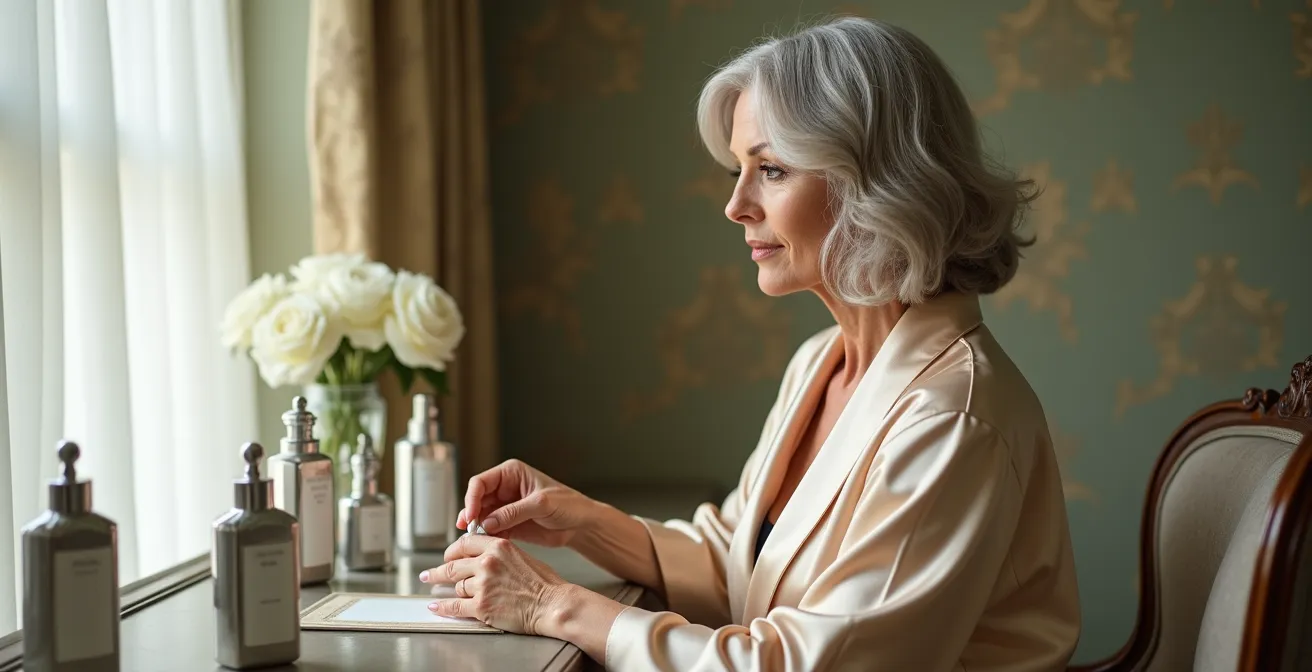
True décolletage care goes beyond creams; it’s an architecture of preventative science and sensory elegance.
- Targeted treatments like microneedling and careful retinol use can effectively address existing sun damage and fine lines.
- Conscious tactile choices, particularly using silk during sleep, actively prevent the formation of new wrinkles and enhance skin health.
Recommendation: Begin by integrating one key change: either master the “retinol sandwich” technique for your chest or switch to a genuine silk pillowcase to protect your skin nightly.
It often begins with a subtle morning realisation. You glance in the mirror and notice fine, vertical lines etched across your cleavage that weren’t there before, a temporary map of your night’s sleep that takes longer and longer to fade. Or perhaps it’s the V-neck top that now reveals a constellation of sunspots, a permanent reminder of sunny holidays past. For many women in their 40s and 50s, the décolletage—the delicate area from the neck to the top of the chest—is one of the first places to show signs of ageing, often more so than the face.
The standard advice is well-known: moisturise diligently and never forget sunscreen. While essential, this advice barely scratches the surface. It overlooks the mechanical stresses and unique sensitivities of this area. But what if the secret to a truly smooth and radiant décolletage wasn’t just about fighting wrinkles, but about cultivating a complete ‘tactile signature’? This is an approach that marries advanced skincare science with the profound, sensory-rich benefits of luxurious textures, transforming daily care into a ritual of preventative elegance.
This guide moves beyond the basics. We will explore not only why these changes happen but also provide a detailed, nurturing plan to address them. We’ll delve into the science of how you sleep, the art of applying active ingredients without irritation, the professional treatments worth considering in the UK, and the transformative power of choosing the right fabrics. It’s time to give this beautiful, expressive area the sophisticated care it deserves.
To help you navigate this comprehensive approach, we’ve structured this guide to cover every aspect of décolletage care, from foundational science to the finishing touches of elegance.
Summary: A Nurturing Guide to a Youthful, Smooth Décolletage in Your 40s and 50s
- Why do side-sleepers develop vertical chest lines faster?
- How to apply retinol to the neck and chest without irritation?
- Microneedling vs Laser: Which is better for sun-damaged decolletage?
- The sunscreen mistake most women make with V-neck tops
- How to use highlighter to create dimension on the collarbones?
- Polyester Satin vs Silk Satin: Which is better for sleep health?
- Why do we find smooth textures like silk universally soothing?
- How to mix lace and velvet for a rich tactile experience?
Why do side-sleepers develop vertical chest lines faster?
The primary culprit behind those persistent vertical chest lines is mechanical compression. When you sleep on your side, gravity causes your top breast to fold over the bottom one. For eight hours a night, this position quite literally presses and creases the delicate skin of your décolletage. Unlike expression lines on the face, these are compressive wrinkles. Over time, as collagen and elastin production naturally decline with age, the skin loses its ability to bounce back from this nightly creasing, and the temporary morning lines become permanently etched.
The skin on the chest is also thinner and has fewer oil glands than facial skin, making it more prone to dryness and less resilient. This lack of natural ‘cushioning’ and hydration means it’s more susceptible to external pressures. While changing a lifelong sleeping habit is incredibly difficult, you can provide external structural support. Silicone chest pads are a highly effective solution. Worn overnight, they hold the skin taut, preventing it from creasing. The results can be remarkable; indeed, a clinical study found that 97.5% of women saw a reduction in chest wrinkles after using them. They create a micro-climate that hydrates the skin while physically preventing the compression that causes wrinkles in the first place.
If you wake up with lines, a targeted morning routine can help accelerate their disappearance and provide reparative care. Don’t just wait for them to fade; take action.
Your 5-Minute Morning Décolletage Rescue Routine
- Apply hyaluronic acid serum to plump lines immediately upon waking.
- Use gentle upward massage strokes to boost circulation and lymphatic drainage.
- Apply a cold facial roller (stored in the fridge) to reduce morning puffiness.
- Layer on a peptide-rich moisturiser to support collagen production.
- Finish with broad-spectrum SPF 30+ to prevent further damage throughout the day.
How to apply retinol to the neck and chest without irritation?
Retinol is the gold standard for stimulating collagen and accelerating cell turnover, making it a powerful tool against wrinkles and sun damage on the décolletage. However, the skin here is notoriously sensitive and can react with redness, peeling, and irritation if retinol is applied too aggressively. The key is not to avoid it, but to introduce it with a gentle, strategic approach. The most effective technique I recommend to my clients is the “retinol sandwich” method. This involves buffering the active ingredient between two layers of moisturiser.
Start by applying a thin layer of a simple, ceramide-rich moisturiser to your clean, dry neck and chest. This creates a protective barrier. Wait a few minutes, then apply a pea-sized amount of your retinol product. Finally, ‘seal’ it in with another layer of the same moisturiser. This technique dilutes the retinol’s potency just enough to prevent irritation while still allowing it to deliver its regenerative benefits over time. Frequency is crucial: begin by using this method only once or twice a week. As your skin adapts over a month or two, you can gradually increase the frequency to every other night.
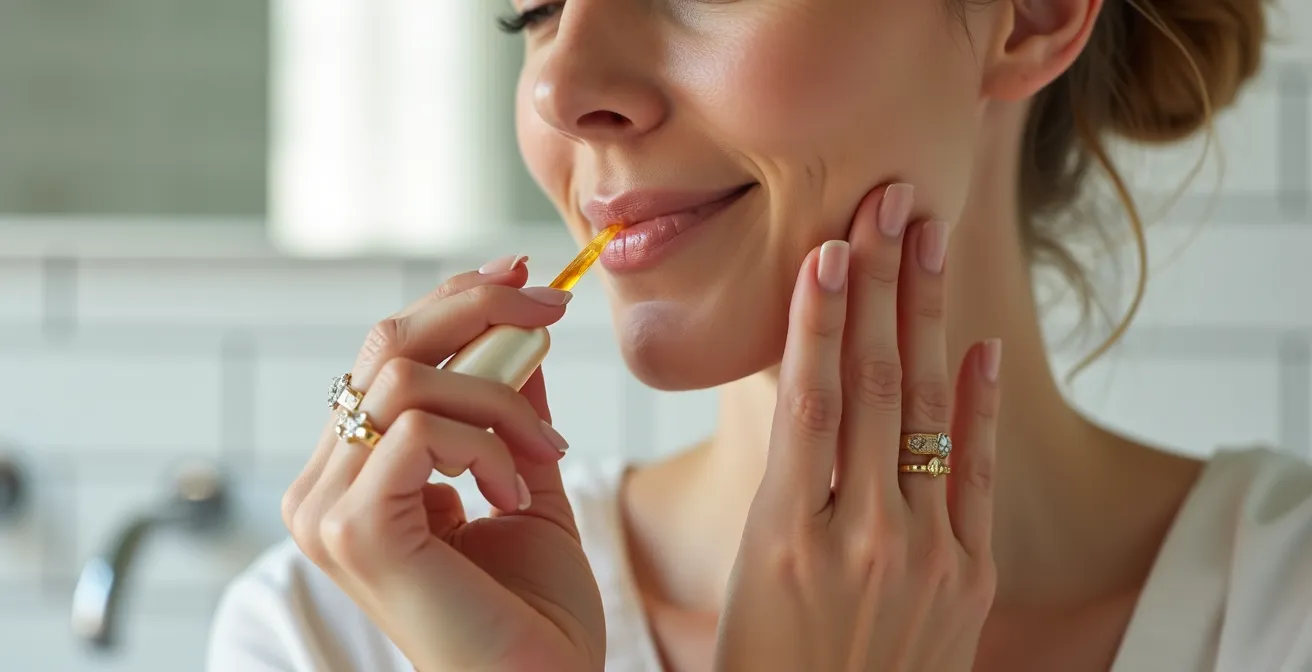
The type of retinol also matters. Instead of high-strength tretinoin, consider starting with a gentler form like Granactive Retinoid, which is known for its high efficacy and lower irritation potential. The goal is long-term consistency, not a short-term aggressive blitz that leaves your skin compromised.
Case Study: The Retinol Sandwich Method Success
Foundation Skincare’s approach involves applying their 2% Granactive Retinoid between barrier cream layers. Users report success by starting once weekly, then gradually increasing frequency. The sandwich method using ceramide-rich moisturisers as ‘bread slices’ significantly reduces irritation while maintaining efficacy.
Microneedling vs Laser: Which is better for sun-damaged decolletage?
When at-home care isn’t enough to reverse significant sun damage, pigmentation, and deeper wrinkles, professional treatments offer a powerful solution. The two leading options for décolletage rejuvenation in the UK are microneedling and fractional lasers. Choosing between them depends on your primary concern, budget, and tolerance for downtime. Microneedling works by creating thousands of tiny, controlled micro-injuries in the skin. This process triggers the body’s natural wound-healing response, stimulating a surge in collagen and elastin production. It is exceptionally effective for improving skin texture, firmness, and fine lines.
Fractional lasers, like Fraxel, work differently. They deliver precise columns of heat energy deep into the skin, leaving the surrounding tissue intact. This ablates old, pigmented cells and stimulates profound collagen remodeling. Lasers are generally more effective for tackling stubborn pigmentation and deeper, more established wrinkles, often delivering more dramatic results in fewer sessions, but with a longer period of social downtime. A third, hybrid option gaining popularity is Morpheus8, which combines microneedling with radiofrequency energy to tighten skin while also boosting collagen. As Dr. Lauren Hamilton, a UK-based aesthetic doctor, notes:
Morpheus8 is an amazing treatment to consider as it combines radiofrequency to tighten and lift the areas with microneedling to increase the skin’s collagen production
– Dr. Lauren Hamilton, Harper’s Bazaar UK
To make an informed decision, it’s vital to compare the practical aspects of these treatments. The following data, based on typical London clinic pricing, provides a clear overview of the investment and commitment required for each.
| Treatment | Cost per Session (London) | Sessions Needed | Total Investment | Downtime | Results Duration |
|---|---|---|---|---|---|
| Microneedling | £200-400 | 3-5 sessions | £600-2000 | 2-3 days | 6-12 months |
| Fraxel Laser | £500-900 | 2-3 sessions | £1000-2700 | 5-7 days | 24+ months |
| Morpheus8 | £600-1200 | 2-3 sessions | £1200-3600 | 3-5 days | 12-24 months |
The sunscreen mistake most women make with V-neck tops
Even the most diligent sunscreen users often make a critical mistake: they apply it to their face and neck but stop at the jawline or the base of the throat. The area exposed by a V-neck top, blouse, or dress is frequently left unprotected. This “V-zone” of the décolletage receives a direct, concentrated dose of UV radiation every time you’re outdoors, accumulating damage over decades. In fact, UK dermatologists emphasize that the majority of sun damage occurs between childhood and our early adult years, long before we see the effects.
The mistake is twofold: incomplete application and inadequate reapplication. Sunscreen is not a once-a-day affair. Its protection degrades after about two hours of sun exposure. On a typical British summer day, an application in the morning before work is often insufficient to protect your skin during a lunchtime walk or on the commute home. The solution is a strategic, all-day defence. This means making sunscreen application on the chest a non-negotiable part of your morning routine, even on cloudy days, as UVA rays penetrate clouds and glass.
For reapplication, convenience is key. Keep an SPF stick or mist in your handbag for easy touch-ups on the go without messing up your clothes or hands. If you engage in outdoor activities, consider investing in clothing with a UPF (Ultraviolet Protection Factor) rating. A UPF 30+ top provides consistent, reliable protection that doesn’t wear off. Think of your décolletage as an extension of your face; it requires the same level of meticulous, year-round sun protection to preserve its health and youthful appearance.
How to use highlighter to create dimension on the collarbones?
Beyond skincare, a touch of makeup artistry can instantly enhance the appearance of your décolletage, creating an illusion of smoothness and elegant structure. The goal is not to glitter, but to subtly manipulate light and shadow. In the UK, where social events often call for an air of understated elegance, this technique is about creating a sophisticated, candlelit glow rather than a dramatic sparkle. The focus is on the collarbones, as accentuating this beautiful bone structure draws the eye upward and lends a graceful line to the neck and shoulders.
A professional technique can be broken down into three simple steps. It’s a play of contrasts: creating depth with a matte shadow and bringing forward the high points with a delicate sheen. The key is using cream products for a natural, skin-like finish and setting them properly to avoid any transfer onto your beautiful garments.

Case Study: Professional Makeup Artist Technique
UK makeup artists recommend a three-step approach for décolletage enhancement. First, apply a touch of matte concealer or a cool-toned contour powder in the hollows just above and below the collarbones to create a soft shadow. Second, with your finger or a small brush, tap a cream highlighter (in a champagne or soft gold tone) along the highest points of the collarbones, from the shoulders toward the centre. Third, lightly dust the entire area with a translucent setting powder to diffuse the look and ensure it stays put all evening. This creates dimension that looks both natural and refined.
Polyester Satin vs Silk Satin: Which is better for sleep health?
Returning to the mechanical cause of chest wrinkles—sleep compression—the surface you sleep on plays a monumental role. Many people opt for “satin” pillowcases, assuming they offer the necessary slip to protect skin. However, it’s vital to understand that “satin” is a weave, not a fibre. Most affordable satin is made from polyester, a synthetic plastic. While it feels smooth to the touch, polyester does not breathe. It traps heat and moisture, which can lead to irritation and breakouts. More importantly, it doesn’t offer the same sophisticated glide as natural silk.
Genuine silk, by contrast, is a natural protein fibre. It is highly breathable, helping to regulate temperature throughout the night. Its long, smooth fibres create a surface with significantly less friction than even the best polyester satin. This means your skin glides across the pillowcase as you move, rather than catching and creasing. This simple environmental change can have a profound impact on preventing sleep lines on both your face and décolletage. When choosing silk, look for the ‘momme’ weight, which indicates density and quality. A momme weight of 19-25 is ideal for bedding, offering a perfect balance of durability and luxurious softness.
While an initial investment, a silk pillowcase is a cornerstone of preventative elegance. In fact, as UK skincare experts note, one high-quality silk pillowcase often costs less than a single jar of a high-end night cream, yet works every single night to protect your skin. Authenticating real silk is simple: the burn test is definitive. A small thread of real silk burns slowly, smells like burning hair, and leaves a crushable ash. Polyester melts into a hard, plastic bead. For reliable quality in the UK, retailers like The White Company, John Lewis, and Lilysilk are excellent sources for genuine silk goods.
Key Takeaways
- The primary cause of vertical chest wrinkles is mechanical compression from side-sleeping, which can be mitigated with silicone patches.
- Introduce retinol to the sensitive décolletage area using the “sandwich method” (moisturiser-retinol-moisturiser) to prevent irritation.
- For significant sun damage, microneedling improves texture, while lasers are superior for pigmentation, with costs in the UK ranging from £600 to over £3000 for a full course.
- The choice of sleep fabric is a skincare decision; genuine silk’s low-friction surface actively prevents sleep creases where polyester satin can fail.
Why do we find smooth textures like silk universally soothing?
The profound benefits of silk on the skin extend beyond mere mechanics; they are deeply rooted in neuroscience. The feeling of a smooth, luxurious texture against our skin is not just pleasant, it is a scientifically recognised form of sensory input that promotes a sense of calm and well-being. This is a core element of your ‘tactile signature’—the conscious choice of textures that nurture both your skin and your mind. When silk glides across your décolletage, it triggers a specific set of nerve fibres in the skin called C-tactile afferents.
These nerves are not designed to detect pain or temperature, but to process and signal the emotional impact of gentle, stroking touch. Activating them sends signals directly to the brain’s emotional centres, reducing stress and promoting feelings of safety, pleasure, and social connection. This is the same neurological pathway activated by a gentle caress or a hug. As noted in sensory neuroscience studies:
The glide of silk on skin stimulates C-tactile afferents, nerves that signal pleasure and safety to the brain, enhancing feelings of sensuality and self-worth
– Neurological Research, Sensory Neuroscience Studies
By consciously incorporating silk into your daily life, you are not just preventing wrinkles; you are engaging in a form of sensory self-care. Starting the day after sleeping on a silk pillowcase, wearing a silk camisole under your work attire, or using a silk eye mask during a moment of evening relaxation are all ways to harness this powerful mind-skin connection. This is preventative elegance in its most holistic form—where an object of beauty and luxury simultaneously serves a deep, biological function for calm and skin preservation.
How to mix lace and velvet for a rich tactile experience?
Cultivating your tactile signature culminates in how you choose to adorn your body. Fashion becomes more than just visual; it becomes a sensory experience. Mixing textures like lace and velvet is a masterful way to create a rich, sophisticated, and alluring tactile narrative, particularly for the décolletage. The success of this pairing lies in their beautiful contrast: the matte, light-absorbing depth of velvet against the delicate, light-reflecting intricacy of lace. This combination sends a complex and elegant message, perfectly aligned with the UK’s appreciation for understated style.
For an evening out or a special date night, the composition is key. A velvet blazer, perhaps from a brand like Reiss known for its sharp tailoring, provides a feeling of warmth, structure, and approachability. When layered over a delicate camisole with a lace trim peeking out at the décolletage, like those from Intimissimi, the effect is transformative. The velvet frames the area with plush softness, while the lace adds a touch of feminine mystery and intricate detail. It’s a dialogue between textures that is both seen and felt.
This pairing is a perfect expression of a mature and confident sensuality. It suggests a woman who is comfortable in her own skin and who appreciates the finer details of life, from her skincare to her fabrics. It’s not about overt revelation, but about the subtle promise of different sensory experiences. By consciously curating the fabrics that touch your skin, you complete the circle of décolletage care—from scientific repair and prevention to the final, beautiful expression of personal style and tactile elegance.
Begin your journey today by choosing one small, manageable step. Whether it’s mastering your sunscreen application down to your V-neck or investing in that first silk pillowcase, every conscious choice contributes to a more radiant and confident you.