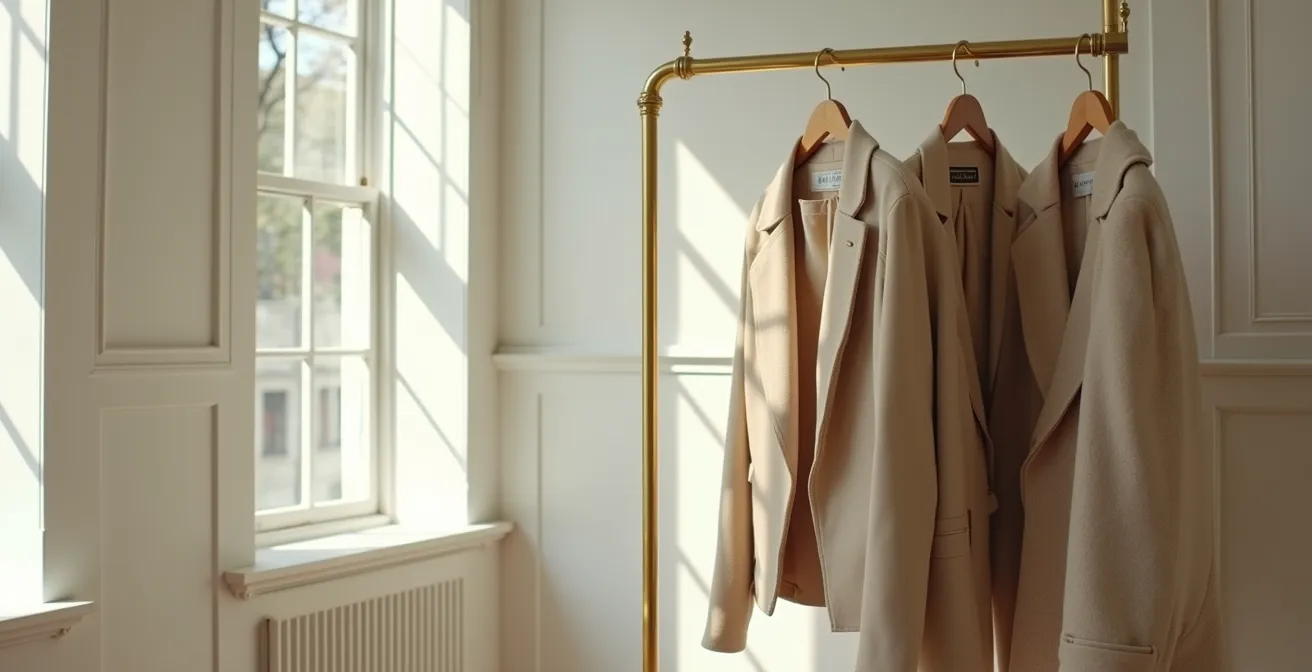
Contrary to popular belief, mastering the lingerie-as-outerwear trend in the UK isn’t about copying celebrity styles; it’s about learning to speak different ‘sartorial dialects’ for specific British cultural contexts.
- The trend’s language was born in the expressive freedom of UK music festivals but is now spoken differently in diverse settings like London’s corporate environments and regional city centres.
- Success lies not in what you show, but in understanding the coded rules of transparency, layering, and heritage styling unique to British life.
Recommendation: Shift your focus from “Can I wear this?” to “What does this combination communicate in this specific UK environment?” to truly master the look.
The line between public and private attire has become one of the most dynamic frontiers in modern fashion. For decades, lingerie was the unseen foundation of an outfit, a secret kept beneath layers. Today, a scroll through Instagram or a walk through Soho reveals a different story: corset boning over a t-shirt, the delicate edge of a lace body beneath a blazer, a silk chemise worn as a dress for a pub garden lunch. This shift, often labelled the “innerwear as outerwear” trend, is more than just a fleeting style moment; it’s a significant cultural phenomenon reflecting changing attitudes towards intimacy, confidence, and self-expression.
Common advice often boils down to simplistic rules like “pair a bodysuit with jeans” or “just be confident.” But these platitudes miss the crucial point, especially within the nuanced landscape of British society. The true art of this trend isn’t about exposure, but about communication. It’s a complex visual language with its own grammar and, most importantly, its own regional and social dialects. The sartorial choices that read as cutting-edge in Dalston could be misinterpreted in a Canary Wharf boardroom. The key isn’t simply to wear lingerie outside; it’s to understand what it says when you do.
This analysis moves beyond generic styling tips to decode the specific rules of this trend within the UK. We will explore its origins in the fields of Glastonbury, dissect the practicalities of layering for the unpredictable British weather, and contrast the modern appeal of different retro revivals. By treating innerwear-as-outerwear as a series of “sartorial dialects,” we can provide a framework for navigating its complexities with intelligence and flair, ensuring your look is always more chic than clash. This guide is about mastering the context as much as the clothing itself.
To fully grasp this cultural shift, we will break down the key scenarios and styling techniques that define the trend in the UK. The following sections offer a detailed roadmap, from festival fields to office corridors, providing the tools to speak this new fashion language fluently.
Contents: Navigating the New Rules of British Innerwear Styling
- Why Did UK Music Festivals Become the Incubator for Lingerie-as-Outerwear?
- How to Layer a Corset Belt Over a Shirt for a Daytime Look?
- 90s Slip Dress vs 50s Bustier: Which Retro Revival Suits Modern British Life?
- The Transparency Error That Takes a Lingerie-Look From ‘Chic’ to ‘HR Violation’
- How to Show a Hint of Lace Without Looking Messy?
- How to Style a Lingerie Bodysuit as Outerwear for a London Night Out?
- How to Wear Your Silk Chemise as a Summer Dress Without Looking Like You’re in Pajamas?
- How to Wear a Lace Bodysuit Under a Blazer Without Violating Office Dress Codes?
Why Did UK Music Festivals Become the Incubator for Lingerie-as-Outerwear?
Long before it graced high-street shop windows, the innerwear-as-outerwear trend was forged in the muddy fields of British music festivals. Events like Glastonbury became cultural laboratories where traditional fashion rules were gleefully disregarded. In this temporary autonomous zone, practicality (dealing with heat in a crowded tent) merged with a powerful desire for individualistic self-expression. Lingerie, freed from its conventional role, became a versatile tool for creating memorable, high-impact looks. It was less about seduction and more about a rebellious, celebratory spirit.
The influence of festival style icons cannot be overstated. As noted by the ELLE UK fashion team, “Glastonbury fashion is iconic. From Kate Moss to Alexa Chung, here are the best ever Glastonbury outfits for your ultimate festival style inspiration.” These figures established a specific British festival aesthetic: a mix of rock-and-roll nonchalance, bohemian freedom, and a pragmatic approach to layering (Hunter wellies with everything). A lace bralette under an open denim shirt or a corset over a vintage band tee became part of this uniform, signalling a confident departure from everyday norms. It was a space where the body could be celebrated without the formal constraints of urban life.
This subcultural trend was then amplified and disseminated into the mainstream by social media. The visual potency of these outfits was perfect for platforms like Instagram, creating a feedback loop where festival looks inspired high fashion, which in turn influenced what attendees wore the following year. The boundary between a niche festival look and a mainstream trend dissolved, cementing festivals as the primary incubator for one of the most significant style shifts of the 21st century. It was here that the first, most anarchic ‘sartorial dialect’ of lingerie as outerwear was born.
How to Layer a Corset Belt Over a Shirt for a Daytime Look?
The corset, once a symbol of restriction, has been reclaimed as an emblem of empowerment and structural style. Bringing this historically significant piece into a modern, daytime context requires a deft hand, particularly within the UK’s diverse style landscape. It’s about adding definition and interest without looking like you’re wearing a costume. The key is to treat the corset belt as a powerful accessory that cinches and defines a silhouette, rather than as a standalone lingerie item. The modern British approach is often about this juxtaposition of the structured and the soft.
British Design Case Study: Dora Larsen
London-based label Dora Larsen exemplifies the modern British approach to lingerie that is designed to be seen. Founder Georgia Larsen, an ex-lingerie buyer, creates elevated everyday pieces that empower wearers. The brand’s contemporary lingerie, featuring striking colour combinations like mesh embroidered bras and candy-coloured knickers, is specifically designed to be glimpsed as part of a layered look, blurring the lines between underwear and accessory.
The technique of layering is everything. The most classic and versatile method is positioning the corset belt over a shirt. This creates a focal point at the waist and transforms the entire look. The choice of shirt and corset creates a specific ‘sartorial dialect’. A crisp, oversized white shirt provides a clean, architectural canvas, while a vintage graphic tee layered with a corset speaks to a more creative, subcultural aesthetic. The goal is to create a deliberate, thoughtful silhouette that feels both contemporary and personal.
This photograph highlights the crucial interplay of textures. The rigid structure and potential sheen of the corset against the soft, matte fabric of the shirt is where the visual interest lies. It’s a masterclass in combining hard and soft elements for a sophisticated daytime look.
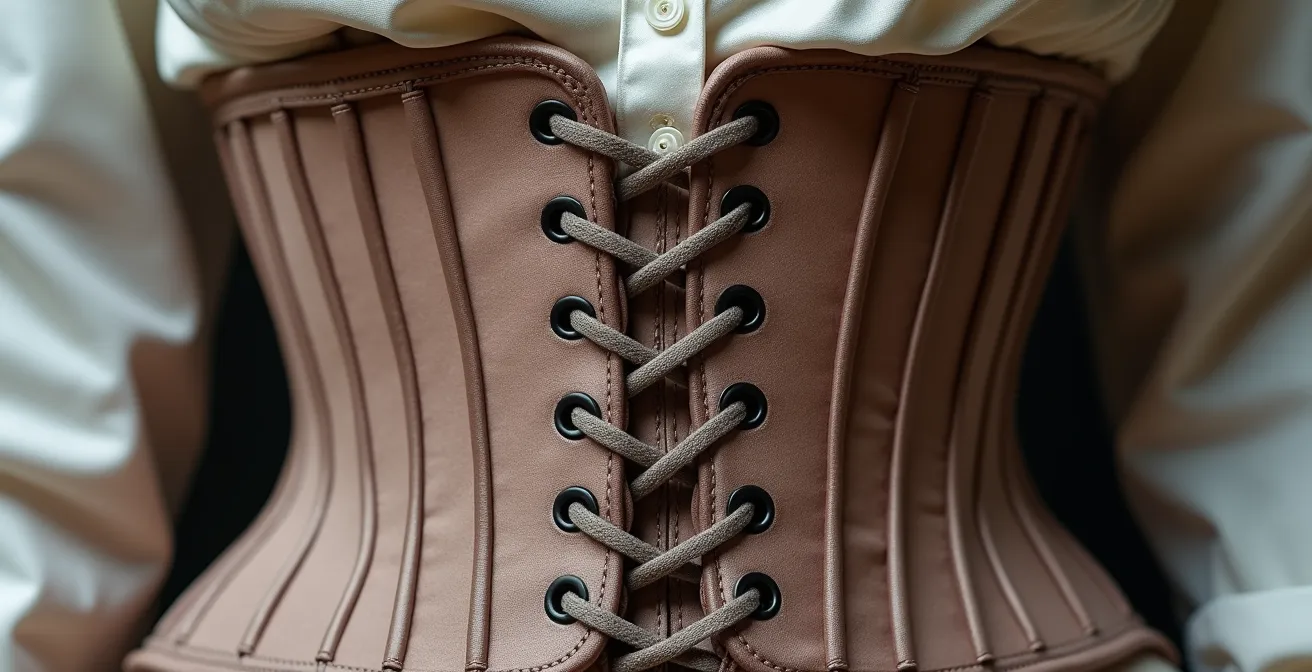
To translate this concept into a practical outfit, consider your environment. The beauty of this styling trick is its adaptability to different British contexts, from a creative agency meeting in Shoreditch to a sophisticated lunch in Edinburgh. It’s about choosing the right components to communicate the right message.
90s Slip Dress vs 50s Bustier: Which Retro Revival Suits Modern British Life?
The innerwear-as-outerwear trend heavily draws from historical archives, with two distinct eras currently dominating the revival: the minimalist, grunge-inflected 90s and the structured, hyper-feminine 50s. The 90s slip dress and the 50s bustier represent two fundamentally different approaches to styling, each with its own cultural resonance and practical implications for modern British life. Choosing between them is less a matter of fashion and more a decision about lifestyle and context. One speaks of effortless cool, the other of deliberate glamour.
The 90s slip dress, popularised by figures like Kate Moss during the ‘Cool Britannia’ era, is defined by its fluidity, bias-cut fabric, and minimalist silhouette. Its strength lies in its versatility. It can be dressed down with a pair of trainers and a denim jacket for a casual weekend, or layered over a t-shirt for a nod to its grunge roots. In a British context, its adaptability to layering makes it a practical year-round staple, easily paired with a cashmere cardigan or a chunky knit when the weather inevitably turns.
In contrast, the 50s bustier is all about structure and definition. It evokes a post-war ‘make-do-and-mend’ glamour, creating an exaggerated hourglass silhouette. While undeniably powerful, it’s a less forgiving and less versatile piece for the hustle of daily life. It demands more planning and is better suited to specific, structured occasions like a night out in Manchester’s Northern Quarter or a themed event. It makes a strong statement, but it lacks the slip dress’s easy-going charm and practicality for a commute on the London Underground.
The choice between these two retro revivals ultimately depends on the demands of your environment and the ‘sartorial dialect’ you wish to speak. The following comparison, based on an analysis of modern wardrobe needs, breaks down their suitability for different facets of British life.
| Aspect | 90s Slip Dress | 50s Bustier |
|---|---|---|
| London Commute Compatibility | High – versatile for tube to pub transitions | Low – requires more structured planning |
| British Weather Adaptability | Excellent with pashmina or cardigan layers | Challenging – needs substantial outerwear |
| Regional Suitability | Cotswolds weddings, Bristol vintage scenes | Manchester Northern Quarter, Liverpool nights |
| Cultural Reference | Cool Britannia era, Kate Moss heyday | Post-war make-do-and-mend revival |
| Practicality Score | 8/10 for British hustle | 6/10 for structured occasions |
The Transparency Error That Takes a Lingerie-Look From ‘Chic’ to ‘HR Violation’
Perhaps the most challenging aspect of the innerwear-as-outerwear trend is navigating transparency. A sheer blouse or a hint of lace can look incredibly chic, but a miscalculation can quickly cross the line into unprofessional or inappropriate territory. This is what we call the transparency error. The root of the problem often lies in the disconnect between the highly curated, often decontextualized images seen online and the realities of everyday environments like the British workplace. People see a bold look on a celebrity and attempt to replicate it without understanding the underlying ‘coded transparency’.
The influence of social media is a significant factor here. As consumer behavior data reveals that over 26% of UK consumers in 2022 reported social media influencers shaped their buying choices, with Gen Z being particularly receptive. These platforms often showcase styles in a vacuum, without the context of an office dress code or social etiquette. This can lead to a fundamental misinterpretation of what is acceptable, taking a look from fashion-forward to a meeting with HR.
Navigating UK Corporate Dress Codes under the Equality Act 2010
British workplace dress codes, governed by the Equality Act 2010 to prevent discrimination, vary wildly. The acceptable level of sheerness in a Reading tech startup, where a subtle glimpse under a blazer is common, is worlds away from the opaque requirements of a City of London law firm. Mainstream retailers like M&S often set the benchmark for the acceptable standard with ‘subtly sheer’ business blouses, while more provocative pieces from brands like Agent Provocateur remain strictly for after-hours. Mastering this is about reading the specific corporate culture.
This image metaphorically represents the fine line. The frosted and clear panes of glass symbolise the boundary between appropriate and inappropriate sheerness, a line that is often blurry and context-dependent.

Ultimately, avoiding the transparency error is about contextual confidence. It requires an honest assessment of your environment’s dress code, whether written or unwritten. The goal is to suggest, not to reveal everything. Choosing high-quality fabrics, layering strategically with opaque pieces like camisoles or blazers, and understanding the specific cultural norms of your workplace are the keys to successfully incorporating sheerness into your wardrobe.
How to Show a Hint of Lace Without Looking Messy?
Showing a hint of lace is an art form. Done correctly, it adds a touch of texture, femininity, and intrigue to an outfit. Done poorly, it can look unintentional, untidy, or simply messy. The secret to success lies in intentionality and quality. The lace should look like a deliberate styling choice, a glimpse of a beautiful foundation, rather than an accidental wardrobe malfunction. This philosophy is about dressing for oneself first and foremost, a point echoed by leading British designers.
All of Bendell’s designs cater to the wearer – and the wearer only – with collections crafted around personal stories and confidence staples.
– Emily Bendell, Bluebella Founder, Country & Town House British Lingerie Feature
This “wearer-first” mentality is the foundation of a successful lace look. The glimpse of lace is for your own sense of layered luxury. To ensure the look is polished, focus on two things: the quality of the lace and the ‘sprezzatura’ of the styling. Sprezzatura, an Italian term for studied carelessness, is the perfect concept here. It’s about making a deliberate choice look effortless. A high-quality lace trim from a Nottingham-made camisole peeking from the V-neck of a cashmere jumper is a prime example of this. It suggests a hidden layer of quality without being overt.
The context, as always, dictates the execution. The ‘sartorial dialect’ of lace in Camden Market, where deconstructed and layered lace is part of a punk-inspired aesthetic, is entirely different from the language spoken on the King’s Road in Chelsea, where a single, pristine lace edge under a tailored blazer is the height of sophistication. Controlling the amount of lace shown is also crucial; for most daytime or professional-adjacent settings, a visible trim of 2-3cm is the maximum to maintain a polished look.
Your Action Plan for Perfecting the Art of Lace
- Assess the Context: Where will this be worn? (e.g., Camden Market vs. King’s Road). Define the appropriate ‘sartorial dialect’.
- Select Quality Lace: Inventory your pieces. Prioritise items with fine detailing, like heritage Nottingham lace, over fast-fashion alternatives for a more elevated look.
- Plan the ‘Glimpse’: Identify the single point of contact where lace will show (e.g., neckline, cuff, hem). The rest of the lingerie piece should be completely concealed.
- Practice ‘Sprezzatura’: Combine the lace piece with contrasting textures. A delicate lace trim against a chunky Brora cashmere knit or a tailored blazer creates a look of effortless, confident style.
- Limit the Exposure: Check your final look in a mirror. For daytime appropriateness, ensure the visible lace is limited to a maximum of 2-3cm to keep the effect subtle and chic.
How to Style a Lingerie Bodysuit as Outerwear for a London Night Out?
The lingerie bodysuit has become a cornerstone of modern evening wear, particularly in a dynamic city like London. Its appeal is twofold: it provides a sleek, seamless foundation that smooths the silhouette, and it offers an immediate dose of after-dark glamour. The growing popularity of this piece is not just a fleeting trend; it’s a reflection of a robust and expanding market. In fact, industry forecasts predict the UK lingerie market will grow at a 7.3% CAGR from 2024 to 2030, indicating that pieces like the bodysuit are becoming long-term wardrobe staples.
Styling a bodysuit for a London night out is an exercise in understanding the city’s diverse ‘sartorial dialects’. The key is to use the bodysuit as the anchor of the outfit and build around it with pieces that speak to a specific aesthetic and provide necessary coverage for practicality and comfort. A simple black lace bodysuit can be transformed in countless ways depending on what it’s paired with: high-waisted, wide-leg trousers for a sophisticated Mayfair dinner, vintage Levi’s for a relaxed Soho pub, or edgy cargo pants for a night in a Dalston club.
The bodysuit’s journey from festival fields to urban nightlife demonstrates its remarkable versatility, as seen in high-profile examples that bridge these two worlds.
Case Study: The Bodysuit from Glastonbury to the London Boroughs
At Glastonbury 2024, Dua Lipa’s performance in a sheer lace bustier leotard showcased how bodysuits can command a stage. This festival-ready look was mirrored by attendees who adopted different London borough aesthetics for their own styling. The adaptability of the bodysuit was proven as it was paired with Dalston’s edgy cargo pants, Mayfair’s sophisticated suit layering, and Soho’s classic vintage Levi’s combinations, confirming its status as a versatile staple for diverse UK nightlife cultures.
The most important rule is balance. Because the bodysuit is inherently form-fitting and often features lace or sheer panels, it’s best paired with more conservative or voluminous pieces on your bottom half. This contrast creates a more balanced and fashion-forward silhouette. A full skirt, tailored trousers, or even smart, dark-wash denim can provide the perfect counterpoint, ensuring the overall look is chic and intentional, not simply exposed.
How to Wear Your Silk Chemise as a Summer Dress Without Looking Like You’re in Pajamas?
The silk chemise or slip dress is the epitome of summer elegance, but wearing it as a dress carries the inherent risk of looking like you’ve forgotten to get dressed. The transition from bedroom to beer garden requires a few strategic styling moves that signal clear intention. It’s about adding structure and context to an otherwise fluid and simple garment. The difference between sleepwear and daywear lies entirely in the styling details, transforming the piece from intimate apparel to a chic summer uniform.
The first step is choosing the right foundation. A chemise intended for outerwear should ideally be bias-cut from a quality satin or silk from brands like Ghost or Olivia von Halle. This ensures it drapes beautifully over the body rather than clinging. Furthermore, look for details like French seams and a properly finished hem; these subtle markers of quality are what subconsciously differentiate a dress from nightwear. The goal is to create a look of effortless grace, as captured in the movement of the fabric in natural light.

Once you have the right piece, the most effective technique is ‘The Third Piece Rule’. This involves adding a structured item to ground the fluidity of the silk. A tailored blazer from a brand like Reiss, a classic AllSaints denim jacket, or even just a structured leather belt at the waist can instantly signal that this is a deliberate outfit. This third piece breaks up the single column of silk and adds a layer of sartorial intention. Accessories also play a crucial role; substantial items like a structured cross-body bag or chunky jewellery provide a visual counterweight to the delicacy of the dress.
The British Summer Event Silk Chemise Styling Formula
- Start with a bias-cut satin chemise from Ghost or Olivia von Halle for proper structure.
- Add ‘The Third Piece Rule’ – include a structured item like a Reiss blazer or leather belt.
- For a Pub Garden Sunday: pair with Stan Smith trainers and an AllSaints denim jacket.
- Accessorize with substantial pieces – a structured cross-body bag and chunky jewelry add necessary weight.
- Choose chemises with French seams and proper hemming to clearly differentiate them from sleepwear.
Key Takeaways
- Mastering ‘Sartorial Dialects’: The same lingerie piece requires different styling in Manchester’s Northern Quarter versus a Cotswolds wedding. Context is everything.
- The Power of the ‘Third Piece’: Ground fluid items like a silk chemise with a structured third piece (a blazer, a belt) to signal clear sartorial intention.
- Coded Transparency: In professional settings, success lies in what is suggested, not what is shown. Use layering to control sheerness and stay within your workplace’s cultural dress code.
How to Wear a Lace Bodysuit Under a Blazer Without Violating Office Dress Codes?
The final frontier of the innerwear-as-outerwear trend is the modern workplace. Integrating a lace bodysuit into office attire is the ultimate test of sartorial diplomacy, requiring a deep understanding of your specific corporate culture. It is absolutely possible, but it hinges on nuance, discretion, and an unwavering commitment to professionalism. The goal is to borrow the polish and sleek silhouette of the bodysuit without broadcasting its lingerie origins. The blazer is your most powerful tool in this negotiation, acting as a shield of professional respectability.
The most critical variable is the level of concealment. In a highly corporate environment like a law firm or a bank in Canary Wharf, the blazer should likely remain buttoned. The bodysuit’s role here is purely functional: to provide a perfectly smooth, tuck-free layer underneath. Any visible lace should be minimal to non-existent, perhaps just the highest edge of a high-neckline style. The colour should be neutral—black, navy, or white—to blend seamlessly with traditional suiting.
In more creative industries, such as a media agency in Manchester or a tech startup in Reading, the rules are more flexible. Here, you might wear the blazer open, revealing a greater portion of the bodysuit. However, the choice of bodysuit is still paramount. Opt for styles with more opaque panelling and less intricate lace. Pair it with high-waisted, wide-leg trousers to ensure the overall look remains polished and powerful. The bodysuit is part of a modern power suit, not a standalone statement. Understanding this distinction is key to successfully navigating the workplace acceptability spectrum.
The following table provides a clear framework for judging the level of exposure appropriate for different UK corporate settings, helping you to speak the correct ‘sartorial dialect’ for your profession.
| Corporate Setting | Acceptable Style | Key Requirements |
|---|---|---|
| Canary Wharf Finance | High-neckline, opaque panels | Blazer always buttoned, neutral colors only |
| Manchester Media Agency | Bolder lace patterns allowed | Can wear blazer open with smart trousers |
| Tech Startup Reading | Creative expression welcome | Focus on overall polish vs strict coverage |
| City Law Firm | Minimal to no lace visible | Complete opacity required, conservative cuts |
Ultimately, navigating these complex social and professional codes is the true measure of style. To begin applying these principles, start by auditing your own wardrobe and workplace environment to identify the ‘sartorial dialect’ that is right for you.