
In summary:
- A memorable night in isn’t about fancy recipes; it’s about mastering the “State Shift” from your daily roles to romantic partners.
- Start by engineering your environment. Dim, warm lighting (2700-3000K) is the fastest way to signal a change in atmosphere.
- Implement a 30-minute “de-armouring” ritual to transition from parent or work mode, including changing clothes and putting phones away.
- Use music strategically: instrumental playlists for deep conversation, and save a special lingerie reveal for a natural transition point, like after dinner.
For busy couples, especially those juggling young children or navigating a tight budget in the UK, the idea of a “romantic evening” can feel like a distant memory. The default solution is often a takeaway and a film on the sofa, which, while comfortable, rarely rekindles the spark. The advice is always the same: light some candles, cook a meal, put your phones away. But these actions often feel like going through the motions, a pale imitation of a real night out.
The logistics of babysitters, the cost of restaurants, and sheer exhaustion create a very real barrier. The challenge isn’t a lack of desire for connection, but the difficulty of shifting gears within the same four walls that serve as an office, a nursery, and a living space. The secret doesn’t lie in trying to replicate a Michelin-star dinner, but in mastering the art of the “State Shift”. It’s a conscious, ritualised process of transforming your environment and your mindset from the everyday to the extraordinary.
But if the real key isn’t what you do, but *how* you transition, what does that look like in practice? It involves intentionally designing the sensory experience of your home—what relationship coaches call creating “sensory architecture”—to signal to your brains that this time is different. It’s about creating a clear boundary between “parent mode” and “partner mode.”
This guide will walk you through the practical steps to engineer that transition. We’ll explore how to use lighting, sound, and simple rituals to create a sanctuary for two, proving that a thoughtfully planned evening at home can offer a depth of intimacy that no crowded restaurant ever could.
Summary: Your guide to crafting an unforgettable night in
- Why is lighting the single most critical factor for an intimate mood?
- How to transition from “parent mode” to “partner mode” in 30 minutes?
- Jazz vs Lo-Fi: Which playlist best encourages deep conversation?
- The smartphone habit that kills intimacy in 90% of couples
- What to serve for a romantic dinner that won’t leave you feeling bloated?
- When is the optimal moment to reveal a new luxury set during an evening?
- How to use an evening lingerie change to mentally separate work from rest?
- How does the color and fit of your bottom layer dictate your mood for the day?
Why is lighting the single most critical factor for an intimate mood?
Before you even think about food or music, you must address the light. It is the most powerful and immediate tool for environmental transformation. Our brains are hardwired to associate bright, overhead, blue-toned light with daytime, activity, and work. Dim, warm light, conversely, signals evening, relaxation, and intimacy. This is the foundation of your sensory architecture.
The goal is to eliminate the “big light” and create layers of softer, warmer illumination. The ideal colour temperature for a romantic atmosphere is something lighting experts confirm, with research showing that warm light with a color temperature of 2700K to 3000K is optimal. This is the golden, cosy glow you get from table lamps with fabric shades, dimmer switches, and, of course, candlelight. It softens features, reduces mental stimulation, and creates a private, cocoon-like feeling.
Think about the most romantic venues. They never rely on a single, harsh light source. As a prime example, Clos Maggiore in Covent Garden, often named London’s most romantic restaurant, builds its fairytale ambiance through a masterful use of layered lighting. It combines cascading fairy lights with the warm, flickering glow of an open fireplace. This multi-source approach creates depth, visual interest, and a profound sense of intimacy that has made it a top UK destination for proposals and special occasions. You can replicate this effect at home with a combination of lamps, candles, and even strategically placed fairy lights to signal that the space has changed its function for the evening.
How to transition from “parent mode” to “partner mode” in 30 minutes?
For parents, the biggest hurdle to intimacy isn’t time; it’s the mental shift. The house is full of reminders of your other role: toys on the floor, homework on the table. A successful evening requires a deliberate ritual to signal to yourselves that you are “clocking off” from parenting and “clocking in” as partners. This “de-armouring ritual” is non-negotiable.
The process needs to be simple and achievable. It begins with individual decompression. For ten minutes, separate to do something just for you—one partner might read a chapter of a book while the other listens to a podcast. This creates a buffer zone. The next step is a physical transition: changing out of your day clothes. This simple act has a profound psychological effect, marking a clean break from the day’s responsibilities. It signals that the “uniform” of work or parenting is off.
The core of the transition can be a shared, calming activity. A fantastic British example is a simple tea ritual, using non-caffeinated blends from brands like Pukka or Fortnum & Mason. It’s a moment to reconnect without pressure, to simply sit together and breathe. This is when you can set the final atmosphere: dim the lights, light candles, and crucially, place your phones in a designated charging station, out of sight and out of mind. This entire 30-minute sequence transforms not just the space, but your internal state, making you present and ready for connection.
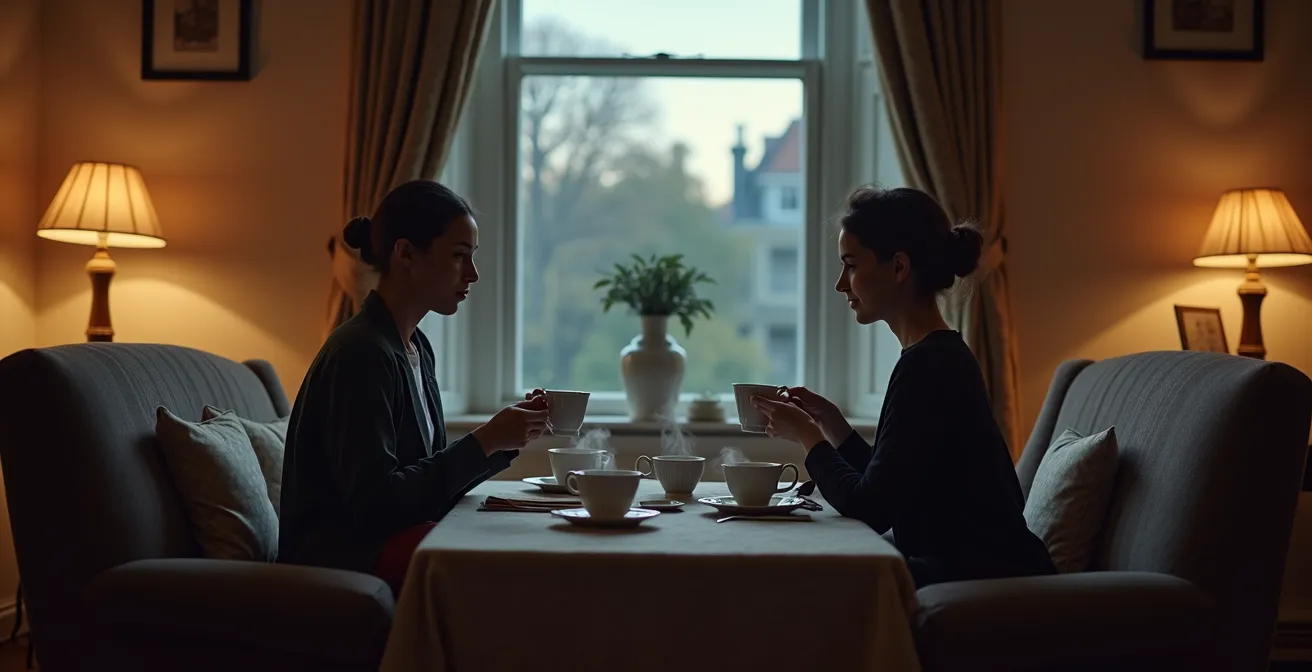
As you can see, this moment isn’t about grand gestures. It’s a quiet, shared experience that creates a boundary between the chaos of the day and the calm of the evening. Some couples even use a specific room spray only for these moments, adding a powerful scent cue to their ritual and strengthening the sensory shift.
Jazz vs Lo-Fi: Which playlist best encourages deep conversation?
Music is the second pillar of your sensory architecture, but the wrong choice can be worse than silence. A television show will command your attention, while a pop playlist with familiar lyrics can pull you into singalongs rather than conversation. The goal is to choose music that provides energy and atmosphere without dominating. It should be a texture, not the main event. The key is to think of your evening in acts, with a different soundtrack for each.
For the first act, during dinner or drinks, the music should be upbeat but not intrusive. It needs to fill the space and encourage a natural, light-hearted flow of conversation. For the second act, when you want to move into deeper connection and conversation, the music must shift. This is where lyrics become a distraction. Instrumental playlists are your strongest ally. They maintain the energy and intimate atmosphere but leave cognitive space for listening and sharing. Lo-fi hip-hop or instrumental jazz provides a sophisticated, cool-headed backdrop that supports conversation rather than competing with it.
As the evening progresses to its third act, you can shift to something with a slower tempo and more atmospheric quality to encourage physical closeness. British trip-hop, for instance, has a sultry, intimate feel that’s perfect for later in the evening.
This table offers a practical guide, using examples from the UK music scene, to help you curate the perfect sonic journey for your evening.
| Evening Stage | Music Genre | UK Artists/Examples | Conversation Impact |
|---|---|---|---|
| Dinner (Act 1) | UK Soul/Indie | Michael Kiwanuka, Tom Misch | Upbeat but non-intrusive, allows natural flow |
| Deep Conversation (Act 2) | Instrumental Lo-Fi | UK producers on Spotify’s ‘Jazz UK’ playlist | No lyrics to distract, maintains energy without dominance |
| Later Evening (Act 3) | British Trip-Hop | Massive Attack, Portishead, Bonobo | Creates intimate atmosphere, slower tempo for closeness |
The smartphone habit that kills intimacy in 90% of couples
You can perfect the lighting, curate the music, and cook a delicious meal, but all of it will be instantly undone by one thing: the smartphone. The habit of “phubbing” (phone snubbing) your partner is the single most effective way to kill an intimate atmosphere. It sends a clear message: “Whatever is on this screen is more important than you right now.” In the UK, the problem is widespread; a LloydsPharmacy survey found that 33% of Brits feel ignored when their partner uses their phone in their company.
This isn’t just a minor annoyance; it has a corrosive effect on relationship satisfaction. It creates micro-moments of rejection that build into a larger feeling of disconnection. The impact is stark: a comprehensive study on the subject found that couples experiencing phone distractions are 70% less likely to be “very happy” with their marriage compared to those without phone issues. This isn’t a vague feeling; the research highlights that these couples perceive their odds of future divorce to be four times higher. Creating a rule is essential, not as a punishment, but as a mutual agreement to protect your time together.
A “digital coat check” is an effective strategy. Designate a drawer or a basket away from your main living area where you both agree to deposit your devices for the duration of the evening. This physical act of putting the phone away is part of the digital decompression process. It removes the temptation and, more importantly, creates a shared understanding that this time is sacred. If you need a more playful approach, a “date night jar” where anyone who reaches for their phone has to put £1 in can turn the rule into a game, with the proceeds funding a future treat.
What to serve for a romantic dinner that won’t leave you feeling bloated?
The food you choose for a romantic evening should serve the ultimate goal: connection and intimacy. A heavy, rich meal that leaves you both feeling lethargic and bloated is counterproductive. The focus should be on light, flavourful, and sensual foods that energise rather than exhaust the body. Sharing plates are a wonderful way to foster interaction and a sense of togetherness.
A beautifully arranged British sharing board can be both elegant and easy. Think of combining different textures and flavours that you can enjoy together over conversation. Consider a menu that feels special without requiring hours of work:
- Create a British sharing board with Scottish smoked salmon, Isle of Wight tomatoes, and a quality local cheese like Cornish Yarg.
- Serve Whitstable oysters with a sharp champagne vinegar mignonette as a classic, light starter.
- Prepare a simple main like pan-seared fish with steamed English asparagus and a lemon butter sauce.
- For gourmet quality without the stress, order a finish-at-home meal kit from a top UK restaurant via a service like Dishpatch.
- End the meal with fresh Scottish raspberries and a small portion of high-quality dark chocolate (70% cacao minimum).
Certain foods can also subtly contribute to a romantic mood. For instance, the salmon on your sharing board is more than just a tasty treat. As nutritionists note, salmon’s omega-3s help maintain optimal sex hormone production. The goal is a meal that delights the senses and leaves you feeling light, comfortable, and ready for the rest of the evening.
When is the optimal moment to reveal a new luxury set during an evening?
Introducing a special piece of lingerie is about more than just the item itself; it’s about anticipation and storytelling. A surprise reveal can be powerful, but timing is everything. Abruptly disappearing to change can break the flow of the evening. The optimal moment is often found within a natural transition, turning it into a seamless and sophisticated part of the night’s progression.
Relationship experts point to the “post-dinner transition” as the ideal opportunity. This is the moment when you naturally move from the dining table to the sofa or a more comfortable space. This physical change of location creates a feeling of starting a “new chapter” of the evening. Using this moment to “slip into something more comfortable” feels planned and elegant, rather than sudden. In the UK, this can be framed as a luxurious evolution of the evening, transforming the reveal from a simple surprise into a shared moment of appreciation, especially if paired with another small gift, like a craft gin for your partner alongside a new set from Selfridges.
The reveal itself can be enhanced by building a thread of romantic tension throughout the earlier parts of the evening. A simple, playful comment can be incredibly effective. As relationship expert Pepper Schwartz, Ph.D., advises, you can amplify the moment by hinting at it earlier.
Building anticipation verbally throughout the evening, mentioning having ‘a little something special’ to wear later, creates a thread of romantic tension that makes the eventual reveal more impactful.
– Pepper Schwartz, Ph.D., co-author of The Normal Bar
This approach turns the lingerie from a simple garment into the culmination of a promise, making the reveal feel earned and all the more exciting. It’s a masterful way to weave anticipation into the fabric of your romantic evening.
How to use an evening lingerie change to mentally separate work from rest?
In the age of widespread working from home, the lines between our professional and personal lives have blurred. The bedroom can become the office, and the laptop is always within reach. Using a change of clothing as a psychological trigger to enforce this boundary is an incredibly powerful form of the “de-armouring ritual.” It’s the definitive signal that the workday is over.
This is about more than just comfort; it’s a mental transition. Your work clothes, even if they are just casual loungewear, become a uniform. Taking them off is the equivalent of clocking out. This ritual should be intentional. Always change in a personal space like the bedroom or bathroom, never in your home office, to reinforce the spatial boundary. You can enhance this ritual with other sensory cues, such as lighting a specific “evening only” scented candle from a brand like The White Company as you change. This pairs the physical act with a distinct aroma, strengthening the mental association between that scent and the end of work.
The texture of what you change into is also key. Associating the feeling of fabrics like silk and lace specifically with the absence of work thoughts helps to cement the transition. This practice is not just theoretical; it’s a lived experience for many UK couples adapting to new work patterns.
Many UK couples report that creating a clear physical and mental boundary between work and personal time has become essential since widespread WFH adoption. One couple shared: ‘We treat 6pm like leaving the office – phones down, work clothes off, evening attire on. It’s become our signal that the workday is truly over and we’re transitioning to couple time.’
– British Couples’ Experience, Marie Claire UK
Your WFH de-armouring ritual: A checklist for mental transition
- Treat work clothes (even loungewear) as a uniform that must be removed to ‘clock off’.
- Always change in the bedroom or bathroom, physically separating the act from your home office space.
- Light a specific ‘evening only’ candle or use a unique room spray when changing to create a powerful scent association.
- Consciously associate the textures of silk and lace with the absence of work-related thoughts.
- Create a final physical boundary by closing the home office door *before* you begin to change.
Key takeaways
- Intention Over Imitation: The goal isn’t to copy a restaurant, but to create a unique, intimate space through deliberate “state shifts”.
- Sensory Architecture is Key: Master the environment by layering warm light, using music strategically, and engaging scent to signal a special occasion.
- Rituals Create Boundaries: A 30-minute “de-armouring” ritual to transition from work/parent mode to partner mode is the most crucial part of the evening.
How does the color and fit of your bottom layer dictate your mood for the day?
The anticipation for a romantic evening doesn’t have to start when the sun goes down. It can be a quiet, personal secret you carry with you all day. The concept of “enclothed cognition” suggests that the clothes we wear can genuinely influence our thoughts and feelings. Choosing to wear a special set of lingerie, even under your everyday clothes, can act as a powerful confidence booster and a day-long thread of anticipation for the evening ahead.
This isn’t about discomfort or dressing for someone else. In fact, it’s the opposite. Leading UK brands like Bravissimo and Figleaves have championed the idea that the true source of confidence comes from a perfect fit that ensures all-day comfort. When you feel physically good in what you’re wearing, it translates into a powerful inner confidence. Retailers like M&S have seen their Autograph line, designed for both comfort and elegance, become popular for exactly this reason. It allows the wearer to build a private sense of excitement that slowly simmers throughout the day.
The colour you choose can also play a subtle role in setting your mood for the day and the night to come. While personal preference is paramount, colour psychology offers a fascinating lens through which to make your choice. Think of it as choosing your “mood” for the day, with each shade carrying its own subtle energy.
| Colour | British Palette Name | Mood Impact | Best For |
|---|---|---|---|
| Deep Blue | Royal Blue | Confidence and authority | Important meetings or date planning |
| Soft Pink | English Rose | Romance and femininity | Intimate evenings |
| Purple | Highland Heather | Mystique and creativity | Special occasions |
| Black | Classic Black | Power and sophistication | All-day anticipation building |
| Red | Burgundy/Wine | Passion and energy | Confidence boost throughout the day |
By transforming your environment and mindset with intention, you create an oasis of connection that is far more personal and potent than any night out. Start by applying these principles to your next planned evening in, and discover the deep intimacy that’s waiting to be unlocked within your own home.