
Contrary to popular belief, silk is not a delicate, impractical fabric for men; it is a technically superior, strong, and hygienic material that often outperforms cotton and synthetics in daily wear.
- High-quality silk is stronger than cotton, offering a lower cost-per-wear over time, making it a sound investment.
- Silk’s natural protein structure actively manages moisture and temperature, providing year-round comfort that synthetic fabrics cannot match.
Recommendation: Begin by investing in one pair of high-grade (19-22 momme) mulberry silk underwear to personally experience its superior comfort and performance before building a collection.
For many men, the idea of silk underwear conjures images of opulent luxury—a fabric seemingly too delicate, too feminine, or too high-maintenance for the rigours of daily life. The default choice remains cotton, valued for its familiarity, or modern synthetics, prized for their athletic performance. This perception is understandable, but it is rooted in a fundamental misunderstanding of what silk truly is. As a material, its history is not just one of aesthetics, but of remarkable technical performance that predates any modern textile innovation. The global men’s underwear market, valued at USD 40.5 billion in 2024, is seeing significant growth in premium segments, indicating a shift towards higher-quality, more beneficial materials.
But what if the key to superior comfort, hygiene, and even practicality wasn’t a new synthetic blend, but one of the oldest and most advanced natural fibres known to man? This guide reframes the conversation around silk. We will move beyond the outdated notions of fragility and explore silk through the lens of a fabric historian and textile scientist. We will deconstruct its surprising strength, analyse its unique moisture-wicking capabilities, and provide a practical framework for incorporating this high-performance fabric into a modern British gentleman’s wardrobe.
This article provides a comprehensive analysis, breaking down the science and practicalities of silk underwear. Explore the sections below to understand every facet of this remarkable fabric, from its molecular strength to its ideal use cases in a modern lifestyle.
Summary: Uncovering the Practical Genius of Silk Underwear
- Why Is High-Quality Silk Actually Stronger Than Cotton Fibre for Fibre?
- How Does Silk Wick Sweat Away from the Body Differently Than Sports Synthetics?
- Jersey Silk vs Woven Silk: Which Offers the Stretch a Man Needs?
- The Activity Mistake That Ruins Silk Boxers in One Afternoon
- When Is the Optimal Season to Introduce Silk into Your Rotation?
- What Distinguishes High-Grade Mulberry Silk Satin from Cheaper Blends?
- Why Does Silk Satin Keep You Warm in Winter but Cool in Summer?
- Why Is Organic Cotton Crucial for the Sensitive Skin of the Groin Area?
Why Is High-Quality Silk Actually Stronger Than Cotton Fibre for Fibre?
The most persistent myth surrounding silk is its supposed fragility. While it feels lightweight, the raw strength of a silk filament is extraordinary. A continuous filament of silk is stronger than a steel filament of the same diameter. This inherent toughness comes from its structure as a protein fibre, primarily composed of fibroin. This long-chain protein structure gives it a tensile strength that far surpasses the short-staple plant fibres of cotton. When properly cared for, a pair of high-quality silk underwear will outlast multiple pairs of its cotton counterparts, resisting thinning and tearing far more effectively.
This durability fundamentally changes the economic equation. While the initial outlay for premium silk is higher, its extended lifespan results in a superior long-term investment. The concept of cost-per-wear becomes critical here. A cheap multi-pack of cotton underwear may seem like a bargain, but when it needs replacing every 6-12 months, the cumulative cost quickly surpasses that of a single, well-made silk garment that can last for years. This is especially true in areas with hard water, common across the UK, where mineral deposits can degrade weaker cotton fibres much faster than the more resilient protein structure of silk.
The following analysis, based on data from menswear experts, illustrates how the long-term value of silk challenges the upfront cost of cotton. As shown by this cost-per-wear analysis, the annual cost of maintaining a rotation of premium silk can be significantly lower than constantly replacing standard cotton.
| Factor | Premium Silk (Derek Rose) | Standard Cotton (M&S) |
|---|---|---|
| Initial Cost | £65-85 per pair | £12-20 for 3-pack |
| Expected Lifespan | 3-5 years with proper care | 6-12 months regular use |
| Cost Per Year | £13-28 | £20-40 |
| Special Care Required | pH-neutral detergent, gentle cycle | Standard washing |
| Hard Water Resistance | Protein structure more resilient | Fibres damaged by minerals |
How Does Silk Wick Sweat Away from the Body Differently Than Sports Synthetics?
When it comes to performance, synthetic fabrics like polyester and nylon are often praised for their “moisture-wicking” capabilities. However, they achieve this by simply pushing sweat away from the skin, often leaving it feeling clammy as the moisture sits on the fabric’s surface. Silk operates on a far more sophisticated principle. As a natural protein, it can absorb a significant amount of moisture—up to 30% of its own weight—without feeling damp. This is crucial for all-day comfort.
Instead of just repelling moisture, silk absorbs perspiration and then allows it to evaporate away from the fabric. This two-step process actively manages the microclimate next to your skin, preventing the build-up of sweat that leads to chilling or discomfort. The triangular structure of the silk fibre itself helps to refract light, but on a microscopic level, it creates a surface that helps manage moisture transfer effectively. This process is far more breathable than the plastic-based structure of synthetics, which can often trap odours and bacteria alongside moisture.
This microscopic texture is what makes silk a superior choice for day-long wear, from a commute to the office to an evening out.

As you can see, the fibres don’t just form a barrier; they interact with moisture. Furthermore, silk possesses natural antimicrobial and odour-resistant properties. Because it manages moisture so efficiently and is less hospitable to the bacteria that cause odours, it ensures a feeling of freshness that synthetics, which are a breeding ground for bacteria, simply cannot match. This makes silk an exceptionally hygienic choice for underwear, maintaining comfort and confidence throughout the day.
Jersey Silk vs Woven Silk: Which Offers the Stretch a Man Needs?
Not all silk is created equal, and choosing the right type is critical for practicality. The debate between jersey and woven silk is not about which is “better,” but which is appropriate for the man’s build, attire, and activity. Woven silk, typically used in traditional loose-fitting boxers, is made from threads interlaced at right angles. It offers exceptional breathability and a classic, luxurious feel, but has virtually no natural stretch. This makes it ideal for wear under tailored suits or formal trousers where air circulation is paramount and a close fit is not required.
For the active man or anyone wearing closer-fitting trousers like slim-fit jeans, jersey silk is the superior choice. This is a knitted fabric, where a single thread is looped together, creating a material with inherent mechanical stretch. Often, it is blended with a small amount of elastane (around 5-9%) to enhance flexibility and recovery. Jersey silk offers a body-hugging fit without constriction, moving with the body and eliminating the risk of seam stress or tearing during movement. This makes it the far more versatile option for daily wear, providing support and a smooth, no-show profile. The UK underwear market’s projected growth to £3.5 billion by 2027 reflects a growing consumer demand for such specialised, high-comfort options.
Your Action Plan: Matching Silk Type to Your UK Lifestyle
- For stockier ‘rugby player’ builds: Choose jersey silk trunks with a 9% elastane blend for flexibility and support during daily activities.
- For slim builds wearing tailored suits: Opt for classic woven silk boxers for maximum breathability under non-stretch formal trousers.
- For formal events like Ascot or a wedding: Select woven silk for its superior air circulation during long periods of standing or sitting in warm conditions.
- For a night out in Manchester in slim-fit jeans: Pick stretchy jersey silk briefs or trunks for a seamless, no-show look that moves with you.
- For a brisk morning walk in Hyde Park: Avoid classic woven silk to prevent seam stress from long strides; choose a reinforced jersey silk instead.
The Activity Mistake That Ruins Silk Boxers in One Afternoon
The reputation for fragility often stems from using silk in the wrong context. Silk’s primary vulnerability is not to gentle wear or washing, but to two specific aggressors: high-pH chemicals and intense, prolonged abrasion. The single biggest mistake a man can make is treating his woven silk boxers like all-purpose athletic shorts. A spontaneous football kickabout in the park, helping a friend move flat, or an afternoon of vigorous gardening are guaranteed ways to destroy them. These activities combine intense friction with highly acidic, prolonged sweat, a fatal combination for the fabric’s protein structure.
Case Study: The Impact of pH Shock on Silk Fibres
Laboratory testing provides a clear explanation for this vulnerability. Intense sweat from vigorous sports creates a highly acidic environment with a pH between 4.5 and 5.5. This “pH shock” chemically attacks and permanently weakens the fibroin protein that gives silk its strength. In stark contrast, the mild perspiration from daily activities like office work or a relaxed walk typically has a near-neutral pH of 6.5 to 7. This is well within the tolerance of silk and can be easily managed with proper washing using a pH-neutral detergent specifically designed for protein-based fabrics like silk and wool.
Understanding this distinction is key. Silk is not for the gym or the football pitch; synthetics and durable cottons are designed for that. Silk is the pinnacle of comfort for the 90% of your life spent outside of high-intensity sports. It excels in lounging, social events, office work, and sleep. To ensure the longevity of your investment, it’s crucial to reserve silk for the right occasions and avoid activities that subject it to extreme stress.
- Spontaneous kickabout in the park: High risk of abrasion and sudden tears from rapid, explosive movements.
- Helping a mate move flats: A combination of heavy lifting, friction, and intense sweating creates the perfect storm for pH shock.
- Vigorous gardening afternoon: Abrasive soil and stubborn grass stains can be nearly impossible to remove from the delicate fibres.
- 5-a-side football match: Prolonged exposure to highly acidic sweat will systematically weaken the silk’s protein bonds.
- Instead, wear silk for: Relaxed Sunday mornings, sophisticated evening dates, comfortable work-from-home days, and luxurious sleep.
When Is the Optimal Season to Introduce Silk into Your Rotation?
A common misconception is that silk, being light and airy, is purely a summer fabric. This overlooks its most remarkable quality: its ability to act as a natural thermoregulator. The optimal season to introduce silk into your underwear rotation is, therefore, not one specific season, but rather the transition between them—and ultimately, all year round. Silk is not just for the heat of July or the cold of January; it is for the unpredictable British weather of April and October.
The secret lies in the fibre’s composition. Silk fibres are not perfectly smooth cylinders; they have a triangular cross-section and contain microscopic air pockets within their structure. In cold weather, this trapped air acts as a natural insulator, holding your body heat close to the skin, much like the principle of double-glazed windows. It provides a surprising amount of warmth without the bulk of wool or fleece. In warm weather, the fabric’s high breathability and moisture-managing properties take over, wicking away perspiration and allowing heat to escape, creating a cooling effect on the skin.
This dual-action performance makes it the ideal year-round fabric, capable of adapting to changing environments, from a cold morning commute to a stuffy, centrally heated office.
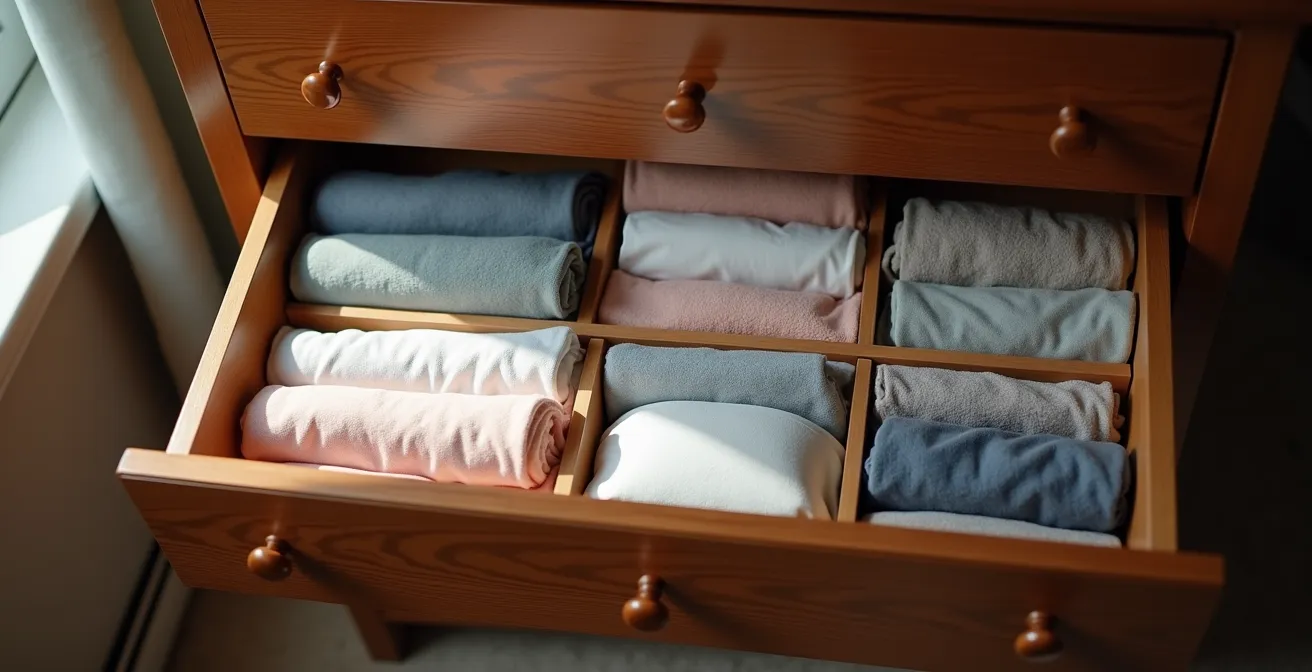
Instead of thinking in terms of a “silk season,” the savvy approach is to view silk as the foundational layer of a well-organised wardrobe. It is the most versatile and comfortable option for the vast majority of days, with heavier wool or lighter linen layers added on top as the external temperature dictates. Introducing silk is not a seasonal swap, but a permanent upgrade to your core essentials.
What Distinguishes High-Grade Mulberry Silk Satin from Cheaper Blends?
Once you’ve decided to invest in silk, navigating the market can be daunting. The market is flooded with “satin,” “silky feel,” and polyester blends that mimic the look of real silk but offer none of its benefits. The gold standard is 100% mulberry silk. This comes from silkworms fed an exclusive diet of mulberry leaves, producing the longest, strongest, and most uniform fibres.
The key metric of quality is momme weight (pronounced ‘mom-ee’). This is a Japanese unit of measurement that indicates fabric density and weight. For underwear, a momme weight of 19-22 is considered ideal—anything less may lack durability, while anything more can feel too heavy. A reputable seller, whether at Selfridges, Harrods, or a specialist online boutique, will always specify the momme weight. A suspiciously low price (e.g., under £30 on Amazon UK) or a missing momme specification is a significant red flag indicating a likely blend or inferior quality.
This commitment to quality is not just about feel or longevity; it has significant health implications. High-grade silk is naturally hypoallergenic and antimicrobial, making it an excellent choice for sensitive skin. With health statistics showing 401,800 new STI diagnoses in England in a recent year, awareness around genital hygiene is increasing. Choosing a fabric that naturally inhibits bacterial growth is a proactive step towards better health. Cheaper satin-polyester blends, on the other hand, trap moisture and heat, creating an environment where bacteria and fungi can thrive.
Savvy Shopper’s Guide: Spotting Real Silk in UK Stores
- Analyse product descriptions at retailers like Selfridges or Harrods, looking for the specific phrase ‘100% mulberry silk’, not vague terms like ‘satin feel’ or ‘silky fabric’.
- Verify the momme weight; quality silk underwear should be clearly labelled as 19-22 momme, a weight comparable to fine suit fabric.
- Be wary of red flags on platforms like Amazon UK, such as a missing momme specification or prices that seem too good to be true (e.g., under £30 for ‘pure silk’).
- Perform a feel test in-store if possible: real silk has a distinctively cool touch and does not generate static electricity when rubbed, unlike polyester satin.
- Check the care label: pure silk will always have special washing instructions (e.g., gentle cycle, pH-neutral detergent), whereas easy-care machine-washable labels often indicate a synthetic blend.
Why Does Silk Satin Keep You Warm in Winter but Cool in Summer?
The ability of silk to provide warmth in winter and coolness in summer is its most counter-intuitive and valuable property. This is not magic, but a feat of natural engineering. The key lies in the unique structure of the silk fibre, which creates an intelligent system of thermal regulation. As an expert from the REI Outdoor Gear Guide notes, this adaptability is a core benefit.
Silk adapts to your body’s needs, keeping you warm in the cold and cool during physical activity – it’s an excellent natural insulator that retains heat while remaining breathable.
– REI Expert Advice Team, REI Outdoor Gear Guide
This dual capability stems from silk’s low conductivity and its fibrous structure. The protein fibres contain countless microscopic air pockets. In cold conditions, these pockets trap a layer of air heated by your body, creating an insulating barrier against the cold. This is particularly effective in the UK, with its many poorly insulated Victorian and Edwardian houses, where a thin layer of silk can make a significant difference to comfort on a drafty morning.
Case Study: Silk’s Thermoregulation in UK Victorian Housing
Scientific analysis of silk’s performance in environments with fluctuating temperatures reveals its effectiveness. The minute interstitial spaces within the fibres function like double-glazed windows, trapping a static layer of air that provides insulation against the cold. However, unlike synthetic insulators, this structure remains highly breathable. When the body heats up or the ambient temperature rises (for instance, moving from a cold train platform to a heated carriage), the fabric allows excess heat and moisture to escape, preventing overheating and sweat build-up. This makes it uniquely suited to the temperature transitions common in British daily life.
This is the opposite of cotton, which absorbs moisture and holds it against the skin, creating a chilling effect as it evaporates. It is also far superior to non-breathable synthetics that simply trap all heat. Silk actively works with your body to maintain a stable, comfortable personal microclimate, regardless of the external conditions.
Key Takeaways
- Silk’s protein structure makes it stronger than cotton, resulting in a smarter long-term investment with a lower cost-per-wear.
- The fabric’s natural thermoregulation and moisture management create a comfortable, hygienic microclimate in all seasons, outperforming synthetics in daily wear.
- Practicality is achieved by choosing the right type (stretch jersey for activity, woven for breathability) and avoiding high-abrasion, high-acid sweat situations.
Why Is Organic Cotton Crucial for the Sensitive Skin of the Groin Area?
While this guide champions silk as the superior primary choice for men’s underwear, an intelligent wardrobe strategy acknowledges a role for other high-quality materials. For men with particularly sensitive skin, or for days when maximum absorption is the absolute priority, GOTS-certified organic cotton stands as a crucial and complementary alternative. Unlike conventional cotton, which is grown with a heavy reliance on pesticides and harsh chemicals, organic cotton is cultivated and processed without them. This eliminates the risk of chemical residues that can irritate the delicate and sensitive skin of the groin area.
However, it is important to understand the trade-offs. Cotton is highly absorbent; it acts like a sponge. While this can be desirable in certain situations, it means the fabric holds moisture directly against the skin, which can lead to a damp feeling and potentially create an environment for bacterial growth if worn for extended periods. Silk, by contrast, wicks moisture away and allows it to evaporate, keeping the skin drier and more hygienic. For daily wear, silk’s natural antimicrobial properties and moisture management make it the healthier option for maintaining skin balance.
The best approach is not an “either/or” mentality but a hybrid strategy. Build your underwear collection with silk as the foundation for the majority of days, and supplement it with a few pairs of high-quality organic cotton for specific needs. This allows you to leverage the strengths of both elite natural fibres.
| Factor | Organic Cotton (GOTS) | Silk |
|---|---|---|
| Moisture Management | Highly absorbent, can hold dampness | Wicks moisture, dries quickly |
| Hypoallergenic Properties | Good for sensitive skin | Naturally protein-based, less irritating |
| Antibacterial | Requires treatment | Natural antimicrobial properties |
| Environmental Impact | Clear eco-win with organic certification | Complex ethics (peace silk vs conventional) |
| Best Use Case | Maximum absorption days | Daily wear for comfort & freshness |
The journey to better comfort and hygiene begins with a single step. By setting aside outdated notions and investing in one high-quality pair, you can personally validate the superior performance of silk and begin building a collection that is not only luxurious, but eminently practical.
Frequently Asked Questions About Fabric Choice for Men’s Underwear
Can silk cause skin irritation in the groin area?
Silk is naturally hypoallergenic and its protein structure is less likely to irritate conditions like eczema, which are prevalent in the UK. It is one of the best fabrics for sensitive skin as it does not cause irritation.
Should I alternate between silk and organic cotton?
Yes, a hybrid strategy works best for a modern wardrobe. Wear silk for most days due to its superior moisture-managing and thermoregulating properties, but switch to GOTS-certified organic cotton on days when maximum absorption is the primary goal.
Which is better for preventing bacterial growth?
Silk has natural antimicrobial properties that actively inhibit the growth of odour-causing bacteria, making it a more hygienic choice for all-day wear. Organic cotton is breathable but may require additional antibacterial treatments to offer the same level of protection.