Seduction & Elegance
Seduction and elegance are often misunderstood as superficial pursuits, yet they represent a sophisticated interplay between psychology, aesthetics, and sensory experience. Far from being merely about appearance, these concepts touch upon self-perception, confidence, and the subtle communication that occurs between individuals in intimate contexts. Understanding how fabric choices, colour psychology, and movement combine to create allure can transform not just how others perceive you, but fundamentally how you perceive yourself.
This exploration draws upon psychological research, aesthetic principles, and the often-overlooked science of attraction. Whether you’re seeking to understand the impact of luxury materials on your confidence, curious about how visual harmony influences perception, or interested in the biological markers that trigger attraction, this resource provides a comprehensive foundation. The goal is not to prescribe rigid rules, but to offer informed perspectives that empower you to make choices aligned with your intentions and authentic self-expression.
The Psychology Behind Seduction and Elegance
The relationship between what we wear in intimate settings and how we feel extends far beyond simple aesthetics. Research in the UK and internationally has consistently demonstrated that fabric quality and garment choice can significantly influence self-esteem, body confidence, and even relationship dynamics. This phenomenon, sometimes referred to as “enclothed cognition,” suggests that the symbolic meaning we attach to clothing directly affects our psychological state.
How Fabric Quality Shapes Self-Perception
The tactile experience of wearing high-quality materials creates a feedback loop between skin sensation and mental state. When you wear silk, fine lace, or premium cotton against your skin, the brain registers this as a signal of value and care. A study conducted across several European countries, including the UK, found that women who invested in quality intimate wear reported measurably higher confidence levels in romantic situations compared to those wearing budget alternatives. This isn’t about price for its own sake, but rather about the tangible difference between synthetic polyester that irritates and natural fibres that breathe and move with the body.
Consider the distinction between a mass-produced item and a carefully constructed piece with French seams and adjustable components. The latter communicates intentionality—both to yourself and, subtly, to a partner. It signals that you’ve taken time to consider your comfort, your presentation, and the experience you wish to create.
Common Misconceptions About Seduction Wear
Several persistent myths undermine many people’s approach to intimate styling. The most damaging is perhaps the notion that seduction requires discomfort—that attractiveness demands sacrifice. In reality, garments that pinch, restrict breathing, or cause physical distress create tension that translates directly into body language and facial expressions. Authentic allure emerges from ease, not constraint.
Another misconception centres on the idea that only certain body types can successfully wear particular styles. This outdated perspective ignores the fundamental principle that elegance derives from proportion, colour harmony, and confidence rather than conformity to a narrow aesthetic ideal. A well-chosen piece that flatters your specific colouring and proportions will always outperform a “trendy” item that works against your natural features.
Timeless Elegance: Redefining Allure at Any Age
The concept of age-appropriate seduction is often loaded with restrictive assumptions that deserve examination. Mature elegance represents not a diminishment of sensuality but rather its refinement—a shift from overt display to sophisticated suggestion. British culture, with its appreciation for understatement, offers a particularly useful framework for understanding this evolution.
Moving Beyond Age-Related Style Clichés
The notion that certain styles become “off-limits” after a particular age rests on cultural anxieties rather than aesthetic principles. In truth, what changes with age is not what you can wear, but rather how you wear it. A woman in her twenties might pair a bold piece with dramatic makeup and statement jewellery, creating an effect of exuberant display. The same piece on a woman in her fifties might be styled with minimal accessories and neutral tones, allowing the quality of the garment and the wearer’s presence to speak for themselves.
The key lies in avoiding both extremes—neither adopting a prematurely “matronly” aesthetic that denies sensuality, nor attempting to replicate styles designed for a different life stage. Instead, focus on elements that transcend age:
- Impeccable fit that follows your body’s current proportions
- Quality materials that demonstrate discernment
- Colour choices that complement your skin’s undertones as they naturally evolve
- Strategic coverage that creates intrigue through selective revelation
Styling Sheer Fabrics with Dignity
Sheer materials occupy a unique position in the vocabulary of intimate wear—simultaneously revealing and concealing, they demand careful handling to avoid crossing into vulgarity. The technique lies in layering and context. A sheer robe becomes elegant when worn over a coordinated foundation, creating depth and visual interest. The same garment worn alone may read as unfinished or overly explicit, depending on the setting and intention.
British sensibilities particularly appreciate the art of suggestion over declaration. When working with transparent or semi-transparent fabrics, consider what you’re drawing attention toward. A sheer panel on the back creates mystery and elegance; sheer fabric across the entire front may overwhelm. The most sophisticated applications use sheerness as an accent rather than the primary feature.
The Art of Visual Harmony
Aesthetic appeal rarely stems from a single element but rather from the coherent relationship between body, fabric, and movement. This harmony isn’t accidental—it results from understanding how different components interact to create a unified impression. Think of it as visual music: each element must complement the others to create a pleasing composition.
Posture and Movement as Foundation
Before considering any garment, accessories, or colour choices, address the foundation upon which everything else rests: how you carry yourself. Posture affects perception more profoundly than most people realise. Rounded shoulders and a collapsed chest create diagonal lines that fragment the silhouette, whilst an elongated spine and open chest produce vertical lines that convey confidence and grace.
This becomes particularly relevant when wearing heels, which alter your centre of gravity and walking pattern. The goal isn’t the exaggerated hip swing often depicted in media, but rather a smooth, controlled movement that suggests ease rather than effort. Practising movement in heels on different surfaces—carpet, hardwood, tile—builds the unconscious competence that allows you to move naturally rather than tentatively.
Coordinating Colours and Accessories
Colour coordination in intimate styling follows principles similar to those in everyday fashion, but with heightened importance given the proximity and focused attention. Understanding your skin’s undertones—whether warm (golden, peachy) or cool (pink, blue)—provides the foundation for choices that enhance rather than compete with your natural colouring.
For those with warm undertones, consider:
- Rich jewel tones like emerald, sapphire, and ruby
- Warm neutrals including champagne, caramel, and bronze
- Deep, warm reds and burgundies
For cool undertones, explore:
- True reds, fuchsia, and cool berry tones
- Icy pastels and stark black or white
- Silver and platinum accents rather than gold
Accessories should enhance rather than distract. A single, quality piece—perhaps a delicate necklace or subtle earrings—creates a focal point without visual clutter. The principle of restraint serves elegance better than abundance.
Understanding What Triggers Attraction
External perception of allure involves both universal psychological triggers and culturally specific responses. Whilst biological factors create baseline responses across populations, cultural context shapes how we interpret and value different signals. In the UK context, subtlety and wit often register as more compelling than overt display.
The Psychology of Colour and Reveal
Colour psychology operates on both conscious and unconscious levels. Red consistently demonstrates cross-cultural association with passion and heightened attention—research has shown that both men and women rate the same person as more attractive when photographed against a red background versus other colours. However, the effect depends on shade and context. A deep burgundy or wine creates sophisticated warmth, whilst bright scarlet may read as aggressive rather than inviting.
The “art of reveal” centres on timing and sequence. Rather than immediate full disclosure, consider the psychological impact of gradual revelation. This might involve the strategic removal of a robe, the unfastening of a single closure, or movement that temporarily exposes then conceals. The brain’s response to novelty and anticipation often exceeds its response to static presentation.
Avoiding the “Try-Hard” Signal
One of the most delicate aspects of seduction involves projecting intentionality without appearing desperate or overly calculated. The “try-hard” signal emerges when effort becomes visible—when someone appears to be performing a role rather than inhabiting an authentic version of themselves. This typically manifests through:
- Over-styling: too many elements competing for attention
- Inappropriate context: wearing something that doesn’t suit the setting or relationship stage
- Visible discomfort: fidgeting with garments or accessories
- Forced expressions: poses or expressions that feel rehearsed
The antidote lies in selecting pieces you genuinely feel comfortable wearing, that align with your personal aesthetic, and that suit the specific situation. Authenticity reads as confidence, whilst imitation reads as insecurity.
The Sensory Dimension of Intimacy
Whilst visual elements dominate initial attraction, tactile experience becomes increasingly important as intimacy deepens. The haptic feedback of different fabrics creates distinct psychological and emotional responses. The skin contains numerous mechanoreceptors that detect texture, temperature, and pressure, sending signals to the brain that influence emotional state and arousal.
Natural fibres generally provide more complex tactile experiences than synthetics. Silk offers cool smoothness that warms with body heat; lace creates textural interest through its raised patterns; cotton provides breathable comfort. Layering different textures—perhaps a silk chemise beneath a lace robe—creates sensory depth that engages touch in multiple ways.
The skin-brain connection means that what feels good to wear will translate into relaxed, positive body language, whilst fabrics that irritate or restrict create tension that manifests in posture and expression. This makes the often-overlooked step of testing garments for comfort as important as a

What biological signals does lingerie amplify to trigger attraction in the brain?
Contrary to the belief that lingerie’s appeal is purely cultural or aesthetic, its true power is rooted in neurobiology. This article reveals that specific lingerie designs act as potent signals—leveraging symmetry, contrast, and novelty—that directly “hack” the brain’s ancient pattern-recognition…
Read more
How does the texture of lingerie influence oxytocin release during intimacy?
Contrary to popular belief, the true power of lingerie lies not just in how it looks, but in how it feels—and how that feeling is translated into the ‘love hormone’, oxytocin. The brain translates specific tactile sensations—the glide of silk,…
Read more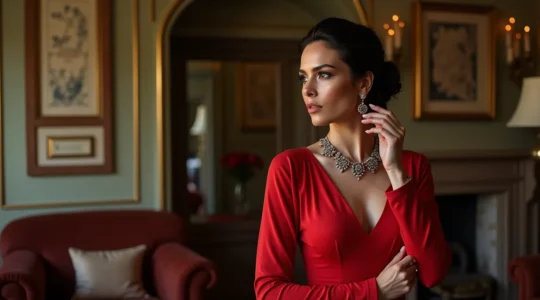
What are the non-verbal cues that make an outfit truly irresistible?
An outfit’s power to attract isn’t about fleeting style trends, but about its ability to send precise, hardwired biological signals. Colour is not an aesthetic choice; it’s a primal broadcast that can trigger deep-seated neurological responses. The strategic balance of…
Read more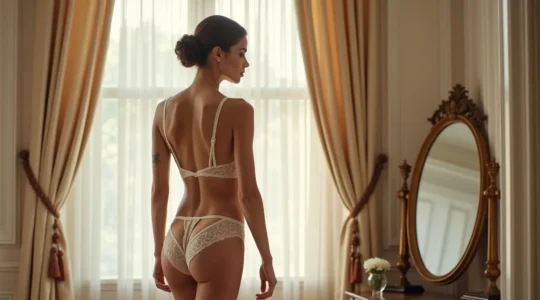
How to Cultivate an Aura of Sensual Elegance: A Masterclass in Posture and Lingerie
True sensual elegance is not bought, it is built. It stems from a profound mastery of your physical presence, not the price of your lingerie. Your posture is the architecture of your elegance; without it, the most luxurious fabrics are…
Read more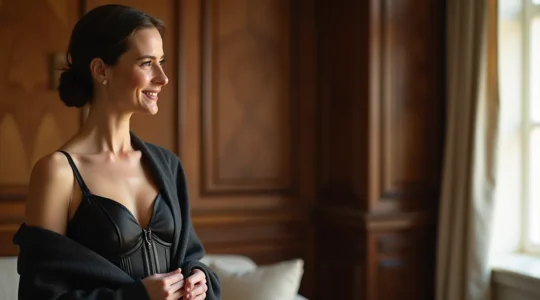
Balancing Eroticism and Elegance: A Guide to Sophisticated Style After 40
Eroticism after 40 is not about replicating youth’s overt signals; it’s about mastering the high-status language of allure that comes from within. Confidence, born from self-knowledge, replaces trends as the primary driver of seduction. Posture and presence are the non-negotiable…
Read more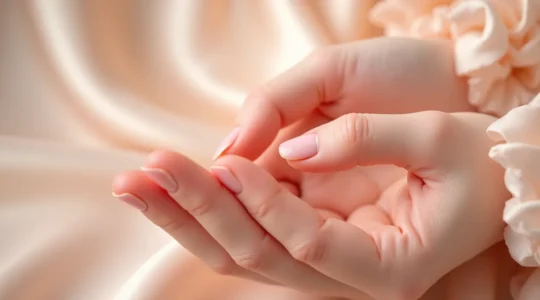
How does wearing luxury lingerie influence confidence on a first date?
The confidence boost from luxury lingerie is not an illusion; it’s a psychological phenomenon known as ‘enclothed cognition’. The physical sensation of high-quality materials and a perfect fit sends powerful signals to your brain, altering your posture and self-perception. It…
Read more