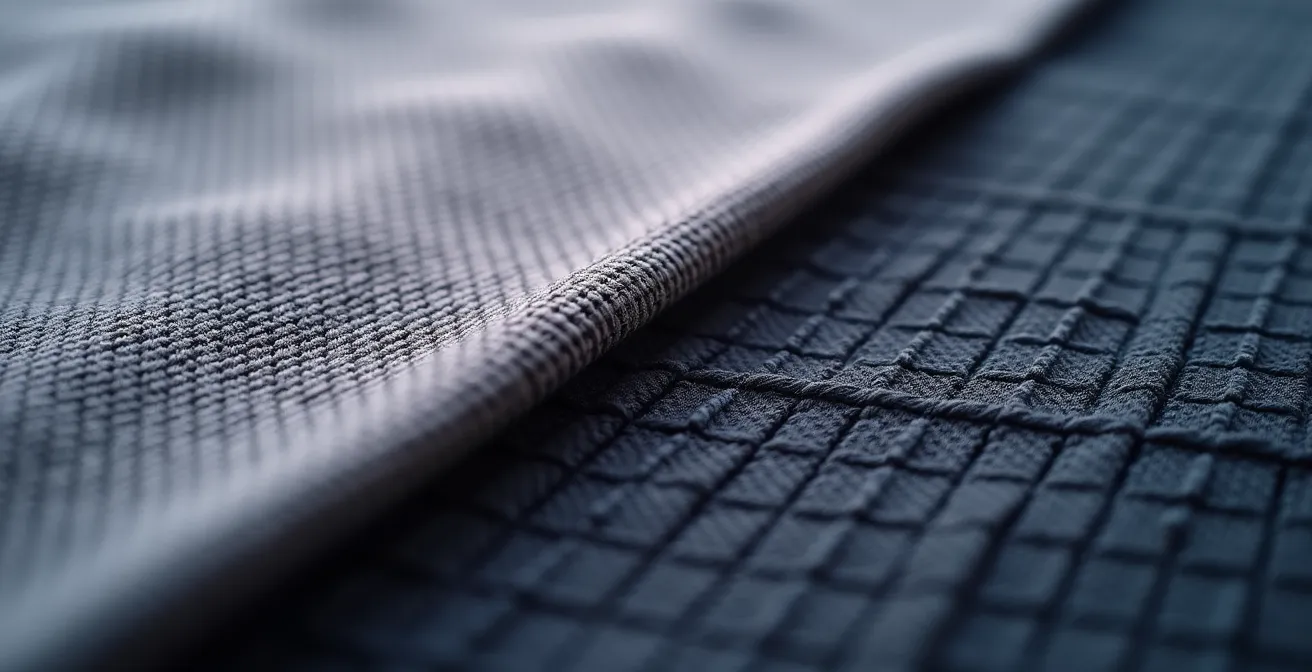
The key difference between modern bodysuits and old-school girdles lies in intelligent engineering, not just brute force compression.
- Modern garments use zoned compression to sculpt soft tissue while allowing joints and ribs to move freely.
- Advanced dynamic fabrics and graduated transitions prevent the discomfort and bulging associated with static, uniform pressure.
Recommendation: Choose your compression level based on the event’s activity level and duration—not just the desired level of sculpting—for a flawless and pain-free experience.
The invitation arrives for that wedding, gala, or milestone birthday, and with it, a familiar sense of dread for many women. It’s not about the event itself, but the underpinnings required for that perfect silhouette. The memory of traditional girdles—rigid, unforgiving, and often painful—looms large. For decades, the accepted wisdom was that sculpting one’s figure required a day-long battle against a constrictive garment, a necessary evil for a smooth finish under a fitted dress. This approach treated the body as something to be uniformly squeezed into submission, often leading to discomfort, restricted breathing, and unsightly bulges where the garment ended.
But what if the entire premise of “squeezing” is outdated? The evolution of shapewear has moved from simple constriction to sophisticated biomechanical engineering. The conversation is no longer about brute force, but about science. Modern, medical-grade compression bodysuits operate on a completely different principle: intelligent, zoned support that works in harmony with your body’s physiology. They are designed not to crush, but to contour; not to restrict, but to move with you. This is the fundamental departure from the static, often punishing pressure of old-school girdles.
This guide will demystify the technology that makes this revolution possible. We will explore the science of zoned compression, the importance of dynamic materials, and the critical design features that ensure comfort without compromising on a sculpted result. By understanding the “why” behind the design, you can finally choose a garment that empowers you with confidence for any occasion, ensuring the only thing that takes your breath away is the event itself.
To help you navigate this new generation of shapewear, we will break down the key considerations, from ensuring all-day comfort to preventing common fit issues. This structured approach will equip you with the knowledge to make an informed choice.
Contents: The Bodysuit Revolution: A Modern Compression Guide
- Why is “firm” control sometimes too much for a 6-hour event?
- How to ensure a sculpting bodysuit doesn’t create a “muffin top” at the back?
- Hook-and-Eye vs Open Gusset: Which is actually practical for a wedding guest?
- The sign that your shapewear is compressing your ribs too much
- How to prevent the “quadricep bulge” where the bodysuit leg ends?
- How to ensure figure-hugging lingerie moves with you rather than restricting you?
- Medium vs Firm Control: Which is sustainable for an 8-hour workday?
- How to ensure figure-hugging lingerie moves with you rather than restricting you?
Why is “firm” control sometimes too much for a 6-hour event?
The logic seems simple: for a major event, opt for the firmest control possible to achieve the most dramatic silhouette. However, this overlooks a crucial factor: your body’s physiological response over time. A garment that feels perfectly snug when you first put it on can become a source of significant discomfort after several hours, especially during events that involve prolonged sitting. Old-school girdles applied uniform, high pressure across the entire torso, which can lead to restricted diaphragmatic breathing, digestive discomfort, and even pressure on the sciatic nerve. This static compression is the primary culprit behind the pain associated with traditional shapewear.
Modern bodysuits with medical-grade compression employ a far more intelligent approach called zoned compression. This technology maps the body and applies varying levels of pressure to different areas. Firmer panels target and smooth soft tissue areas like the abdomen, while more flexible zones are engineered around the rib cage and joints to allow for natural movement and breathing. This distinction is critical for long-duration wear. For a standing event like a garden party at Royal Ascot, firm control might be manageable. But for a seated seven-course dinner, as highlighted in a recent UK scenario comparison, that same firm control can become intensely challenging as your digestive system needs space to function.

As the illustration demonstrates, modern design focuses on targeted support rather than all-over constriction. The goal is to create a smooth canvas without compromising your body’s essential functions. Overly firm, non-zoned compression for a long event can lead to symptoms like acid reflux or back tension, turning a celebration into an endurance test. True comfort and performance come from a garment that understands and adapts to your body’s needs over the course of an entire evening.
Action Plan: Your 6-Hour Event Comfort Test
- Wear the shapewear at home for at least 2 hours before the event day to assess initial feel.
- Sit down for 30 minutes continuously to specifically test for any pressure on the sciatic nerve.
- Eat a small meal while wearing the garment to simulate your digestive system’s response to compression.
- Practice deep breathing exercises: if only your chest moves and not your belly, the compression is too firm for healthy wear.
- Stand and walk for 15 minutes to check for any emerging lower back tension or posture changes.
How to ensure a sculpting bodysuit doesn’t create a “muffin top” at the back?
The dreaded “back bulge” or “muffin top” is a common and frustrating issue where the edge of the shapewear digs into the skin, creating a visible line under clothing. This is often a direct result of two main factors: incorrect sizing and outdated garment design. A prevalent myth is to “size down” for extra firmness, but this is the most common cause of bulging. When a garment is too small, its edges act like a tourniquet, displacing soft tissue upwards and outwards. This is confirmed by extensive wear tests; a comprehensive Good Housekeeping Institute test involving 80 women with body shapes from XS to 3XL underscores the importance of adhering to brand-specific size charts for a smooth finish.
Beyond sizing, the engineering of the garment’s back and edges is paramount. Old-fashioned girdles often had a low back and thick, stitched hems, which created an abrupt, harsh edge. Modern sculpting bodysuits combat this with several key innovations:
- High-Back Designs: Garments that extend higher up the back, often integrating with your bra straps, create a single, unified smooth line from shoulder to hip, eliminating the gap where a bulge can form.
- Bonded Panel Technology: Instead of bulky seams, brands like Spanx and Heist use heat-bonded or “liquid-power” edges. These are ultra-thin, flat panels that lie flush against the skin, creating a seamless transition.
- Seamless Edge Panelling: The best designs feature edges that gradually decrease in compression, allowing the fabric to melt into the skin rather than cutting into it.
When shopping, especially in UK department stores like John Lewis or seeking advice from specialists at Bravissimo, it’s vital to trust your actual dress size as the starting point. Pay close attention to the back height of the bodysuit and ensure it works in harmony with your chosen bra. A well-designed bodysuit shouldn’t just compress the front; it must manage the entire torso as a single, smooth surface. The absence of back bulge is a clear indicator of superior design and correct fit.
Hook-and-Eye vs Open Gusset: Which is actually practical for a wedding guest?
While the fit and feel of a bodysuit are paramount, the practicalities of wearing one for several hours—especially at an event like a wedding with free-flowing prosecco—cannot be overlooked. The design of the gusset, or the crotch area, becomes a major point of difference for real-world usability. The two most common designs are the traditional hook-and-eye closure and the more modern open or overlapping gusset. While hook-and-eye closures offer security, they can present a significant challenge when a trip to the ladies’ room is required, particularly when wearing a complex outfit like a jumpsuit or navigating the often-tiny cubicles of historic UK wedding venues.
The open gusset, often called a “crotch slit” or “double-gusset,” is a simple yet revolutionary feature. It consists of an overlapping fabric design that allows you to use the restroom without having to undo any fastenings or remove the entire garment. This dramatically improves the practicality of all-day wear. As one customer noted in a Who What Wear shapewear review, this feature is a game-changer.
This shapewear is amazing; it takes your dress to a whole new level. Plus, it has a crotch slit which allows you to enjoy your cocktails without removing the whole garment, too. Brilliant!
– Customer Review, Who What Wear Shapewear Review
The primary concern with open gussets is hygiene, but this is easily addressed by wearing your own seamless knickers underneath the bodysuit. For a wedding guest, the benefits in terms of speed, convenience, and dexterity (especially after a glass or two) make the open gusset a clear winner for practicality. The decision becomes even clearer when you’re wearing a jumpsuit, where a hook-and-eye bodysuit would necessitate undressing almost completely.
The following table, based on a practicality analysis for UK wedding venues, breaks down the key differences:
| Feature | Hook-and-Eye | Open Gusset |
|---|---|---|
| Tiny historic venue cubicles | Very challenging | Much easier |
| Re-fastening after prosecco | Difficult dexterity required | No fastening needed |
| Jumpsuit compatibility | Must undress completely | Practical solution |
| Hygiene consideration | Direct contact | Wear with seamless knickers |
| Speed factor | 3-5 minutes | Under 1 minute |
The sign that your shapewear is compressing your ribs too much
The most critical distinction between effective sculpting and dangerous constriction lies in *where* the pressure is applied. Modern medical-grade compression is designed to target soft tissues—like the abdomen and thighs—while leaving the bone structure, particularly the rib cage, relatively uncompressed. An overly tight or poorly designed garment that constricts the ribs can impede breathing, affect posture, and cause sharp pain. According to safety guidelines from medical garment specialists, correctly sized shapewear should feel like a “gentle hug”—snug and supportive, but never painfully tight or restrictive. If you feel sharp pain, tingling, or numbness, the garment must be removed immediately.
The clearest sign that your shapewear is compressing your ribs too much is a change in your breathing pattern. Healthy, relaxed breathing is diaphragmatic, meaning your belly should rise and fall with each breath. When the rib cage is too constricted, the body is forced into shallow “chest breathing,” where only the chest and shoulders move. This is inefficient and can lead to anxiety and light-headedness over time. You can perform a simple test to check for this.
To ensure your garment is safe, follow this simple protocol:
- Lie down flat on your back while wearing the shapewear.
- Place one hand on your upper chest and the other on your belly, just below your rib cage.
- Take a slow, deep breath in through your nose.
- Observe which hand moves more. For healthy diaphragmatic breathing, the hand on your belly should rise significantly more than the hand on your chest.
- If only your chest hand moves, or if you feel a strong restriction against your belly rising, the garment is too tight around your diaphragm and ribs.
This test provides undeniable bio-feedback. A well-engineered bodysuit with proper zoned compression will have flexible panels around the diaphragm to allow for this natural movement. Ignoring the warning signs of rib compression is not only uncomfortable but can also have negative health implications. Prioritising your ability to breathe deeply is non-negotiable for safe, all-day wear.
How to prevent the “quadricep bulge” where the bodysuit leg ends?
Much like the back bulge, the “quadricep bulge”—that visible indentation on the thigh where a shaper short ends—is a tell-tale sign of outdated or poorly-fitted design. This occurs when a thick, high-compression hem cuts abruptly across the soft tissue of the thigh, creating a “sausage-casing” effect. It instantly ruins the smooth line the garment is supposed to create. This problem was endemic to older generations of shapewear that used a one-size-fits-all approach to compression from hip to hem.
The solution lies in a sophisticated technology known as graduated transition. Instead of an abrupt stop, the best modern bodysuits feature leg openings where the compression is gradually reduced along the final few centimetres of the fabric. This allows the material to seamlessly “melt” into the skin, creating an invisible transition under even the tightest trousers or skirts. This is achieved through advanced manufacturing techniques that alter the weave and tension of the fabric at the edge.
Leading UK-available brands have pioneered different solutions to perfect this transition. For instance, Spanx’s Thinstincts 2.0 line and Heist’s ‘The Highlight Short’ are lauded for their use of laser-cut edges and “invisi-grip” silicone hems. These features ensure the leg openings are paper-thin and lie completely flat against the thigh. Furthermore, some designs incorporate ribbed cuff technology, which not only provides a smooth edge but also prevents the shorts from riding up or bunching throughout the day. When trying on a bodysuit with a leg, always check the finish under a pair of fitted trousers or a pencil skirt. There should be no discernible line. This invisible finish is the hallmark of high-quality, modern engineering.
How to ensure figure-hugging lingerie moves with you rather than restricting you?
The ultimate test of modern shapewear is not how it looks when you are standing perfectly still, but how it performs when you move. A garment that restricts movement is fundamentally at odds with comfort and confidence. The difference between a bodysuit that moves with you and one that fights against you lies in the science of its fabric. Old-school girdles were often made with rigid, low-stretch materials that provided static control but severely limited mobility. Modern innovation has focused on creating dynamic materials that offer both support and flexibility.
The key ingredient is a high percentage of elastane (also known as Spandex or Lycra) combined with advanced knitting techniques. According to medical garment experts at Marena, their proprietary advanced 3D Stretch fabric technology provides up to 250% stretch of its original length, allowing it to move, bend, and twist with the body before recovering its shape perfectly. This high degree of “stretch and recovery” is what allows a garment to feel like a second skin rather than a cage. It accommodates the natural expansion and contraction of muscles during movement, providing consistent smoothing without ever feeling restrictive.
You can actively test a garment’s dynamic properties in the fitting room. Don’t just stand and look in the mirror; put it through its paces with a series of movements to simulate real-life activity:
- The Squat Test: Perform a deep squat to check for flexibility in the hips and ensure the fabric doesn’t pull uncomfortably.
- The High-Kick Test: A gentle high-kick will immediately reveal if the legs are prone to riding up or bunching.
- The Torso Twist: Twist your upper body from side to side to see if the waistband or top edge rolls down.
- The Sit-Stand Test: Sit down and stand up quickly a few times. The garment should snap back into place without needing adjustment.
A garment that passes these tests is built for dynamic wear. It is engineered not just for a static pose but for a life in motion—dancing at a wedding, hailing a cab, or bending down to pick up a dropped clutch. This harmony between support and movement is the true sign of a superior, modern design.
Medium vs Firm Control: Which is sustainable for an 8-hour workday?
While firm control has its place for short, high-impact events, it is generally not a sustainable or healthy choice for an 8-hour workday. Daily wear requires a focus on long-term comfort, breathability, and the ability to perform routine tasks without restriction—from sitting at a desk to commuting on a crowded Tube. This is where medium control shapewear truly excels. As a guide from SKIMS notes, mid-level compression options are versatile fan favourites that smooth and support while remaining comfortable enough for all-day wear.
These shapewear pieces enable all-day, every day, moderate control of the tummy, waist, and thighs and work really well across your wardrobe.
– SKIMS, SKIMS Compression Guide
Medium control offers a perfect balance: it provides noticeable smoothing and support to boost confidence under work attire, but its lower compression level doesn’t interfere with vital bodily functions like digestion or deep breathing. This is particularly important for desk jobs, where prolonged sitting in a firm control garment can lead to significant discomfort around the abdomen and diaphragm. Furthermore, the constant strain placed on firm control garments from daily wear can cause them to lose their elasticity and shape more quickly, making medium control a better long-term investment with a lower cost-per-wear.
The following analysis breaks down the key differences for a typical workday in the UK:
| Factor | Medium Control | Firm Control |
|---|---|---|
| Desk job comfort | Optimal support | Can restrict breathing |
| Active roles (retail/teaching) | Good balance | Too restrictive |
| Lunch break digestion | No issues | May cause discomfort |
| Tube/bus commute | Comfortable | Particularly uncomfortable |
| Garment lifespan | Longer lasting | More strain, shorter life |
For daily use, the goal should be support, not radical reshaping. Choosing medium control is a strategic decision that prioritises sustainability, health, and comfort, ensuring your shapewear is a helpful tool, not a daily torment.
Key Takeaways
- True sculpting comes from zoned compression, which targets specific areas without constricting your entire torso.
- Preventing bulges relies on graduated transitions and seamless edges, not just sizing down.
- For all-day wear, prioritise garments with dynamic, high-stretch fabrics that allow for natural movement and breathing.
How to ensure figure-hugging lingerie moves with you rather than restricting you?
While advanced fabric is the engine of a modern bodysuit, the garment’s construction is the chassis that directs its power. A piece of fabric with 250% stretch is useless if it’s cut and sewn into a rigid, restrictive shape. This is where the concept of biomechanical harmony comes into play—the art of designing a garment’s structure to align with the body’s natural movement patterns. Old-school girdles were often constructed from a few large, static panels, forcing the body to move against the garment’s rigid shape. This is why they felt so restrictive during simple acts like bending or sitting.
Superior modern bodysuits, in contrast, are built more like high-performance athletic wear. They feature multiple, smaller, strategically-shaped panels that are seamed together to create articulation. These designs often include:
- Articulated Hip Panels: Separate panels of more flexible fabric are placed over the hip joints, allowing for a full range of motion when walking or sitting without pulling the rest of the garment out of place.
- Floating Gussets: A gusset that is not rigidly attached at all four corners allows for greater flexibility and prevents the garment from pulling uncomfortably during squats or bends.
- Ergonomic Seams: Seams are often curved to follow the body’s natural contours and muscle groups, rather than being cut in straight, restrictive lines. This not only improves comfort but also enhances the sculpting effect.
This level of thoughtful construction is the final piece of the puzzle. It ensures that the fabric’s potential for dynamic movement is fully realised. When you try on a garment, pay attention to how it feels as you move. Does it feel like a single, cohesive unit with your body, or does it feel like a separate entity you are fighting against? The best shapewear achieves a symbiotic relationship with your body, offering support where you need it while remaining virtually unnoticeable as you go about your day. This is the ultimate goal of modern design: to be powerfully effective, yet feel like it’s barely there.
By understanding this blend of material science and anatomical design, you are now equipped to choose a bodysuit that delivers powerful sculpting not through painful restriction, but through intelligent, comfortable support. The next logical step is to apply this knowledge to find the perfect solution for your specific needs and upcoming event.