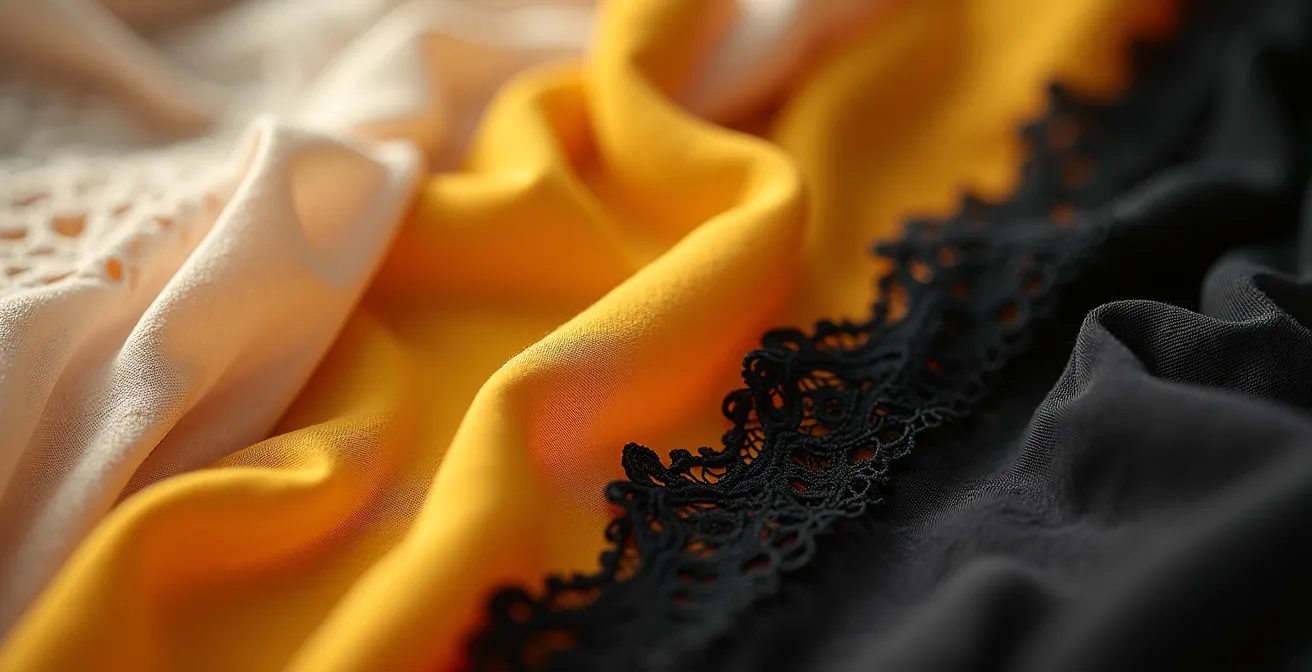
Contrary to popular belief, the confidence from “nice underwear” isn’t just a placebo; it’s a scientific process called ‘enclothed cognition’ where your brain and body are in constant dialogue.
- Specific colours, textures, and fits directly influence your nervous system, altering your emotional state.
- Even unconscious choices, like wearing worn-out underwear, can reinforce negative self-perception and posture.
Recommendation: Begin treating your lingerie drawer not as a collection of garments, but as a toolkit for somatic self-regulation, consciously selecting pieces to cultivate desired mental states like calm, confidence, or focus.
The notion that what we wear influences how we feel is far from new. We talk of ‘power dressing’ for the boardroom or a favourite jumper for comfort. Yet, we often dismiss the psychological impact of the garments closest to our skin—our lingerie—as a simple, fleeting confidence boost. This view overlooks a profound and continuous conversation happening between our body and mind. The fabric against our skin, the gentle pressure of a band, the secret flash of a vibrant colour beneath a muted work outfit; these are not trivial details. They are sensory data points feeding directly into our nervous system.
This phenomenon is known in psychology as enclothed cognition: the systematic influence that clothes have on the wearer’s psychological processes. It suggests that clothing doesn’t just change how others see us, but it tangibly changes how we think, feel, and act. The effect is twofold, involving both the symbolic meaning we associate with a garment and the physical experience of wearing it. This article moves beyond the surface-level advice to ‘wear nice underwear’ and delves into the specific mechanisms at play. We will explore this ‘somatic dialogue’—the way your lingerie choices create a feedback loop that can either soothe your anxiety, amplify your confidence, or subtly sabotage your self-esteem.
This guide acts as an introduction to using your lingerie not as an afterthought, but as an intentional tool for mental wellness and self-care. We will examine how to decode this sensory grammar and make conscious choices that support your psychological state throughout the day, transforming your bottom layer from simple fabric into a form of personal, somatic armour.
To navigate this fascinating intersection of psychology and personal style, this guide explores the tangible ways your underpinnings influence your inner world. Below is a summary of the key areas we will uncover.
Summary: Unlocking the Psychology of Your Lingerie
- Why does wearing bright yellow lingerie under grey clothes boost mood?
- How can gentle compression wear help soothe anxiety symptoms physically?
- Velvet Comfort vs Silk Coolness: Which texture soothes a stressed mind?
- The habit of wearing “give-up” underwear that reinforces low self-esteem
- How to use an evening lingerie change to mentally separate work from rest?
- How does wearing luxury lingerie influence confidence on a first date?
- How does wearing premium underwear influence a man’s posture and psychological state?
- How to cultivate an aura of sensual elegance through posture and lingerie choice?
Why does wearing bright yellow lingerie under grey clothes boost mood?
The idea of ‘dopamine dressing’—wearing specific clothes to elevate your mood—has gained significant traction, with Pinterest data revealing a 16-fold increase in searches for “vibrant outfits.” But the effect is more profound than simply seeing a cheerful colour. The true mechanism lies in the personal symbolic association we have with that colour. Wearing a flash of bright yellow lingerie under a conservative grey suit isn’t about broadcasting happiness to the world; it’s a private signal to yourself. If you associate yellow with sunny holidays, joy, and energy, your brain begins to activate those same neural pathways when you wear it, a process central to enclothed cognition.
This is a powerful form of self-communication. As fashion psychologist Shakaila Forbes-Bell explains in an article for Harper’s Bazaar UK, the key is the pre-existing link in your mind. She states, “When we wear these clothes, the associations have the power to change the way we feel and even change the way we act.” The lingerie becomes a psychological anchor. Its secret nature is part of its power; it’s a choice made purely for you, reinforcing a sense of autonomy and inner control. Professor Karen Pine’s research further validates this, finding that when participants wore clothing with clothes of symbolic value to them, their perceived confidence increased.
Therefore, the yellow lace is not inherently ‘happy’. It becomes a tool for happiness because you have imbued it with that meaning. This is the first step in understanding your lingerie as a form of communication with your own nervous system. You are consciously choosing the message you want to send inward, creating a subtle but persistent uplift that radiates throughout your day, independent of your external environment or attire.
How can gentle compression wear help soothe anxiety symptoms physically?
While colour works on a symbolic level, the fit of our underwear engages our physiology much more directly. For individuals experiencing anxiety, the world can feel overwhelming and boundary-less. Gentle compression wear, such as soft shapewear or a well-fitting, supportive bralette, can provide a profound sense of calm through a mechanism known as Deep Pressure Touch (DPT). This is the same principle behind weighted blankets and swaddling infants. The consistent, gentle pressure on the torso helps to activate the parasympathetic nervous system, our body’s ‘rest and digest’ mode, effectively dialling down the ‘fight or flight’ response.
This sensory input is a key way to stimulate the vagus nerve, a critical component of our nervous system that regulates heart rate, digestion, and emotional state. By applying gentle, sustained pressure, we are sending a signal of safety and containment to the brain. This is not just a feeling; it’s a physiological event. For instance, a 2020 study with 60 participants showed that vagus nerve stimulation led to measurable full-body relaxation. The gentle hug of a compression garment acts as a low-level, continuous form of this stimulation, helping to ground an anxious mind in the physical body.
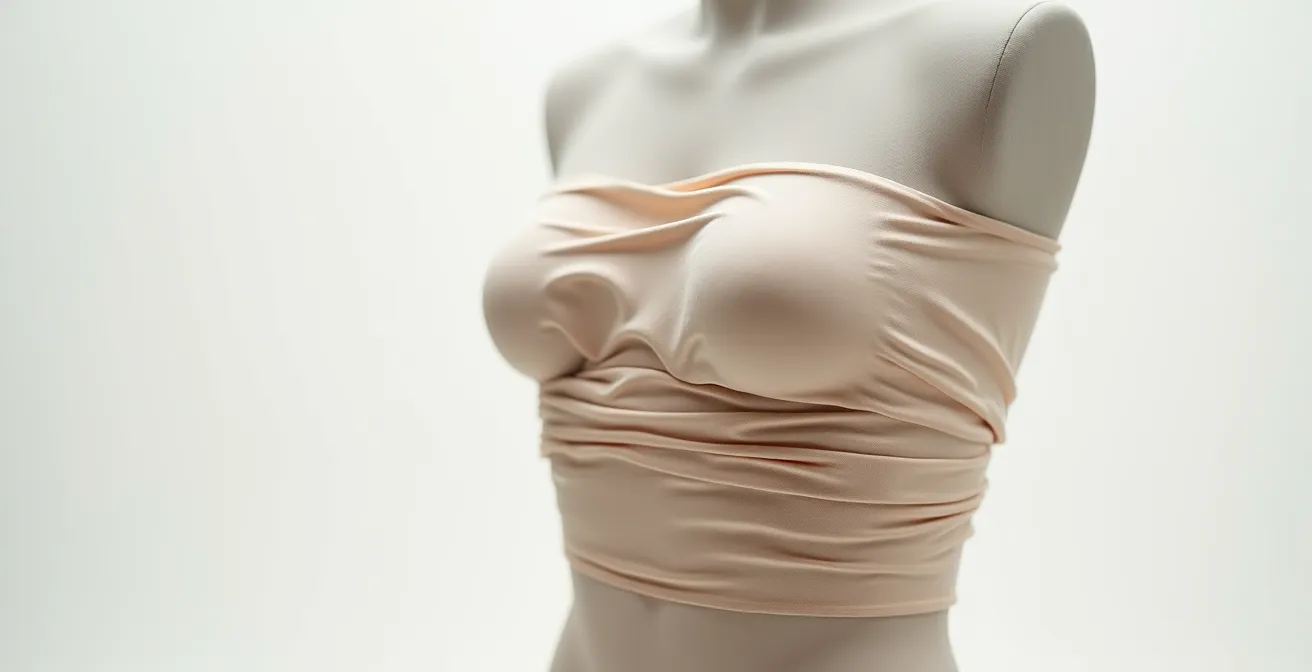
The key is that the pressure must be gentle and comforting, not restrictive. The goal is a feeling of being ‘held’, not ‘squeezed’. This creates a somatic feedback loop: the physical sensation of containment signals safety to the brain, which in turn reduces anxious thoughts, further relaxing the body. It’s a powerful, non-pharmacological tool for managing day-to-day anxiety symptoms, turning your base layer into a source of physical and psychological security.
Velvet Comfort vs Silk Coolness: Which texture soothes a stressed mind?
Beyond colour and fit, texture introduces another layer to our sensory grammar. The feel of fabric against the skin is a potent form of sensory input that our brain constantly processes. When managing stress, the choice between a plush velvet or a cool, gliding silk is not merely aesthetic; it’s a decision about the type of sensory information your nervous system needs. Each texture offers a different psychological benefit, catering to different forms of stress.
Velvet, with its soft pile and weight, provides a form of Deep Pressure Touch, similar to compression wear. It’s grounding, comforting, and enveloping. This makes it ideal for when you feel scattered, anxious, or emotionally cold. It promotes a sense of ‘hygge’—a Danish concept of cosiness and contentment. In contrast, silk is cool, light, and glides across the skin with minimal friction. This is beneficial when you are feeling overstimulated, irritable, or ‘hot-headed’. The coolness can help reduce sensory load, providing a feeling of freedom and unburdening. It allows the mind to feel less cluttered and more serene, much like a cool breeze on a warm day.
This choice between textures becomes a way of regulating your internal environment. The following table breaks down the distinct sensory effects, making it easier to choose intentionally based on your psychological needs, especially considering the variable UK climate.
| Texture | Sensory Effect | Best For | Psychological Impact |
|---|---|---|---|
| Velvet | Deep Pressure Touch | Cold UK winters | Hygge comfort, grounding |
| Silk | Cool, light glide | UK heatwaves | Sensory load reduction, freedom |
By learning to identify what your stressed mind is craving—be it the comforting weight of velvet or the liberating coolness of silk—you can use texture as a precise tool for self-soothing. This conscious selection elevates your lingerie from a simple garment to an active participant in your mental well-being.
The habit of wearing “give-up” underwear that reinforces low self-esteem
Just as conscious choices can uplift us, unconscious habits can subtly erode our self-worth. The act of repeatedly reaching for worn-out, ill-fitting, or discoloured underwear—what we might call ‘give-up’ underwear—is more than just a practical choice on a tired morning. It is a quiet, physical enactment of low self-regard. This habit creates a negative somatic feedback loop: the physical discomfort and lack of care embodied by the garment send continuous, low-level signals to the brain that you are not worthy of comfort, quality, or beauty. This can reinforce feelings of lethargy and low self-esteem, making it harder to break out of a negative mood state.
This isn’t just conjecture; the positive inverse is well-documented. For instance, a survey by a leading lingerie brand found that 61% of women felt more confident when wearing a matching lingerie set, even if no one else saw it. The effect stems from an internal sense of being ‘put together’ from the inside out. The ‘give-up’ underwear habit does the opposite. It normalises a feeling of being ‘let go’ at the most fundamental layer of your self-presentation. This is particularly relevant in a post-WFH world, where the lines between public and private attire have blurred, making it easier for such habits to take root.
Breaking this cycle requires a conscious intervention. It involves recognising the habit and actively replacing it with one that fosters self-worth. This doesn’t necessitate expensive luxury; it means prioritising quality, fit, and comfort in your everyday basics from accessible and reliable UK retailers like M&S. Detoxing your drawer of any item that makes you feel less than your best is a powerful first step.
Your Action Plan: Breaking the ‘Give-Up’ Underwear Habit Loop
- Identify Cues: For one week, notice when you reach for worn-out underwear. Is it on tired mornings, low-mood days, or when you’re in a rush? List these triggers.
- Curate Your Basics: Inventory your current underwear drawer. Remove and discard any items that are torn, stretched-out, or have negative associations. This creates a vacuum for positive replacements.
- Establish a New Routine: Invest in a few sets of high-quality, comfortable basics. The goal is to ensure that no matter what you grab, it supports a feeling of self-respect. Confront this with your list of values.
- Focus on the Reward: As you wear your new basics, mindfully note the sensory reward: the comfort of the fit, the softness of the fabric. This positive reinforcement strengthens the new habit.
- Integrate and Maintain: Schedule a twice-yearly ‘drawer detox’ to prevent old habits from creeping back in. Ensure your collection always aligns with your sense of self-worth.
How to use an evening lingerie change to mentally separate work from rest?
In an age of remote work and blurred boundaries, the psychological transition from a productive ‘work self’ to a relaxed ‘rest self’ is more challenging than ever. The commute, which once served as a natural buffer, has disappeared for many. This is where a ritualistic transition becomes an invaluable psychological tool. The simple act of changing your lingerie at the end of the workday can serve as a powerful physical and mental cue that the day’s demands are over, and a period of personal time has begun.
This practice is an application of ‘mood enhancement dress theory’, which suggests you can consciously shift your emotional state by changing your attire. By designating specific lingerie for the evening—pieces chosen for their texture and feel rather than their utility—you create a distinct sensory boundary. The routine might involve shedding the structured, functional underwear of the day and slipping into something soft, like modal, or sensual, like lace or silk. The key is the mindfulness of the act. It’s not a rushed change but a deliberate, five-minute process.
To amplify the ritual’s effectiveness, you can pair it with other sensory cues. For instance, lighting a candle from a calming UK brand like Neom Organics or The White Company while you change can strengthen the association between the scent, the new fabric, and the state of relaxation. The goal is to create a consistent, multi-sensory signal to your brain: “work is done.” The choice of evening lingerie should be guided by sensation, not appearance. Ask yourself: “How do I want to feel?” rather than “How do I look?”. This shifts the focus from external validation to internal comfort, creating a powerful anchor for rest and psychological detachment from work.
How does wearing luxury lingerie influence confidence on a first date?
On a first date, we are not just presenting ourselves, but also managing our own internal state of anxiety and anticipation. This is where lingerie functions as a form of intentional armouring. The choice to wear a luxury lingerie set, even though it may remain unseen, is a powerful act of self-investment. It operates on the principle of enclothed cognition: you have an association of luxury, quality, and beauty with the garment, and by wearing it, you begin to embody those qualities. This isn’t about the price tag itself, but about the feeling of being deliberate, polished, and valuable from the inside out.
This internal feeling of confidence has tangible external effects. As behavioural psychologist Carolyn Mair, author of “The Psychology of Fashion,” notes, this inner state manifests physically. She explains: “Feeling confident can make us appear more physically attractive because we tend to stand, walk, speak and gesticulate differently.” Your posture may become more open, your movements more fluid, and your speech more assured. The luxury lingerie acts as the unseen foundation for this confident persona. It’s a secret source of power that fuels your external presentation.
Feeling confident can make us appear more physically attractive because we tend to stand, walk, speak and gesticulate differently.
– Carolyn Mair, The Psychology of Fashion
This projection of confidence can even have measurable outcomes in social interactions. While not a first date scenario, consider that studies show waitresses in red earn 15-20% higher tips, partly because the colour is associated with confidence and approachability, which in turn alters their behaviour towards customers. Similarly, the confidence derived from your ‘intentional armour’ on a date can make you seem more engaging and charismatic, profoundly influencing the interaction’s dynamic. It is a testament to the fact that the most impactful elements of our presentation are often those that no one else can see.
How does wearing premium underwear influence a man’s posture and psychological state?
The principles of enclothed cognition are not gender-specific. For men, the choice of underwear has a similarly profound, though often unacknowledged, impact on both physical and psychological well-being. Ill-fitting, unsupportive, or worn-out underwear creates a foundation of subtle discomfort. This constant, low-level physical irritation can translate into mental distraction and a less confident physical bearing. A man fidgeting to adjust uncomfortable underwear is unlikely to project an image of composed authority.
Ergonomic Study: The Real-World Impact of Poor Underwear Design
The link between fit and comfort is not merely anecdotal. An ergonomic study published in a scientific journal explored the pressure and fit of men’s underwear. The research highlighted a critical disconnect, stating: “The structure of the underwear does not conform to human morphology, causing problems such as inappropriate size and high pressure.” It found that most respondents felt more uncomfortable in key areas due to wrinkles and poor fit, especially during prolonged sitting or standing. This constant discomfort directly impacts posture and focus, demonstrating a clear physiological basis for choosing well-designed, premium underwear.
Conversely, premium underwear, engineered with high-quality materials and an ergonomic design, provides a stable and comfortable base layer. This physical support encourages better posture—a straighter spine, more relaxed shoulders—which in itself is a non-verbal cue of confidence. The psychological benefit is twofold. Firstly, the absence of discomfort frees up mental energy, allowing for greater focus and presence. Secondly, the act of choosing and wearing a premium garment is an act of self-respect, reinforcing a positive self-image. It’s the male equivalent of ‘intentional armouring’, creating a sense of being well-supported and put-together from the core.
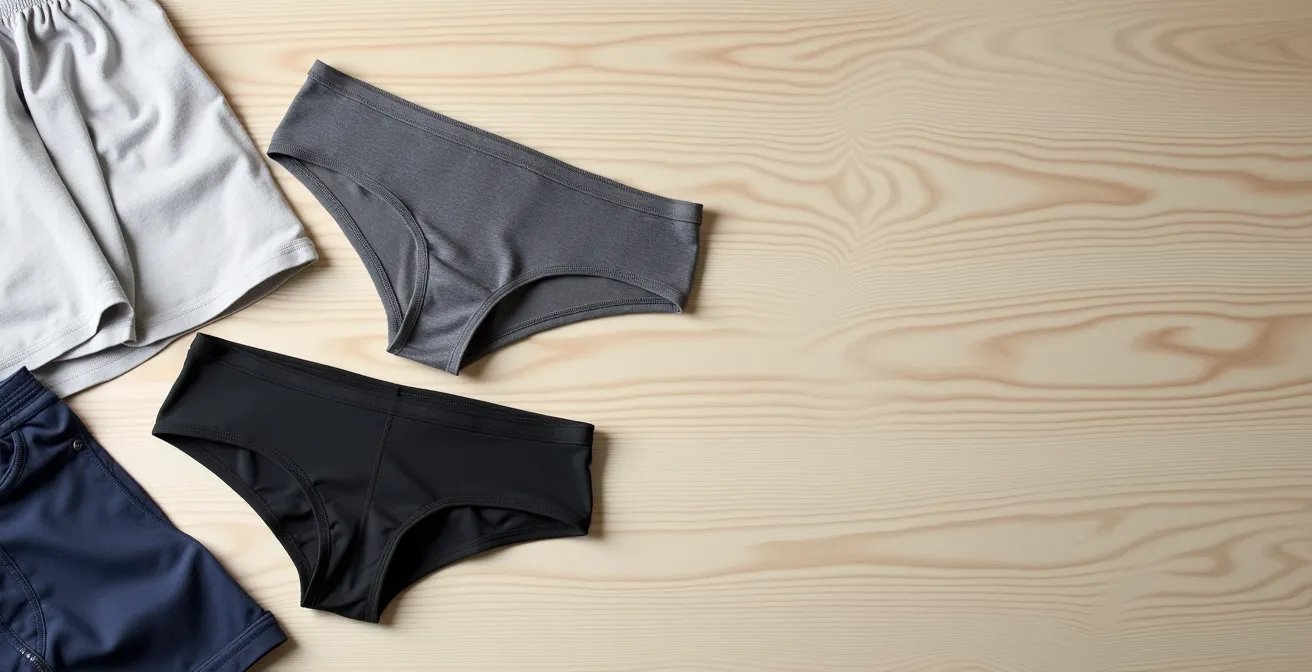
This investment in the foundational layer of a man’s wardrobe is therefore not an indulgence, but a strategic choice. It directly influences his physical comfort, posture, and by extension, his psychological state of confidence and readiness. It’s a clear example of how the somatic dialogue between clothing and body shapes our presence in the world.
Key takeaways
- Enclothed Cognition is a real psychological process where your clothing choices tangibly alter your mood and behaviour.
- Your nervous system responds directly to the colour (symbolism), fit (pressure), and texture (sensation) of your lingerie.
- You can consciously use lingerie as a ‘somatic tool’ to manage anxiety, build confidence, or create mental boundaries, like transitioning from work to rest.
How to cultivate an aura of sensual elegance through posture and lingerie choice?
Cultivating an aura of sensual elegance is the art of synthesising all the principles of enclothed cognition into a cohesive, personal expression. It is not about a specific look, but a state of being—a quiet confidence that radiates from within and is expressed through mindful movement and posture. This state is built upon a foundation of intentional lingerie choices that create a harmonious somatic dialogue between your body and your clothing.
Posture is the primary external expression of this inner state. A well-fitting bra, for example, does more than just support; it physically encourages an open, elegant posture. Think of the ‘ballet core’ stance—an elongated spine, open chest, and relaxed shoulders. This is not a forced position but the natural result of proper support that allows the body to align itself gracefully. This physical alignment sends signals of confidence and poise back to the brain, reinforcing the elegant aura you wish to project.
The choice of fabric contributes the dynamic element to this elegance. The way a silk chemise glides over the skin with each step or how lace moves subtly under an outfit creates a private sensory experience. This constant, gentle tactile feedback encourages more mindful, deliberate, and therefore sensual movement. It is the embodiment of ‘Sprezzatura’, an Italian concept of making something difficult look effortless. The elegance comes from the lingerie feeling like a second skin, so integrated that the grace appears entirely natural. The woman elevates the lingerie, and in turn, the lingerie supports her elegant state of being.
To put these principles into practice, start by treating your next lingerie purchase not as a simple transaction, but as a conscious investment in your own psychological well-being. Choose a piece that aligns with the mental state you wish to cultivate.
Frequently Asked Questions about Lingerie and Psychology
How does a professional bra fitting enhance posture?
A well-fitting bra, often best found through a professional fitting at esteemed UK institutions like Rigby & Peller, does the structural work for you. It supports the weight of the bust correctly, which allows the shoulders to relax backwards and the spine to lengthen. This naturally encourages a ‘ballet core’ posture: an elongated spine, open chest, and relaxed shoulders. This posture is inherently elegant and communicates confidence non-verbally.
What is ‘Sprezzatura’ in a lingerie context?
‘Sprezzatura’ is the quintessentially Italian concept of studied carelessness—making something difficult or deliberate look completely effortless. In lingerie, it means wearing high-quality, beautiful pieces like a silk chemise or a fine lace bralette as if they are second nature. It’s the opposite of looking ‘done up’. The confidence comes from the wearer elevating the lingerie, not the other way around, creating an aura of innate, unforced elegance.
How does fabric movement affect sensual elegance?
Different fabrics create a dynamic, kinetic form of elegance. For instance, the way silk glides over the skin with each step creates a fluid and continuous sensory feedback loop. The subtle movement of lace under clothes provides a private, tactile experience. This constant, gentle awareness of the fabric against your body can translate into more mindful, present, and therefore sensual physical movements. The elegance is not static; it’s in the motion.