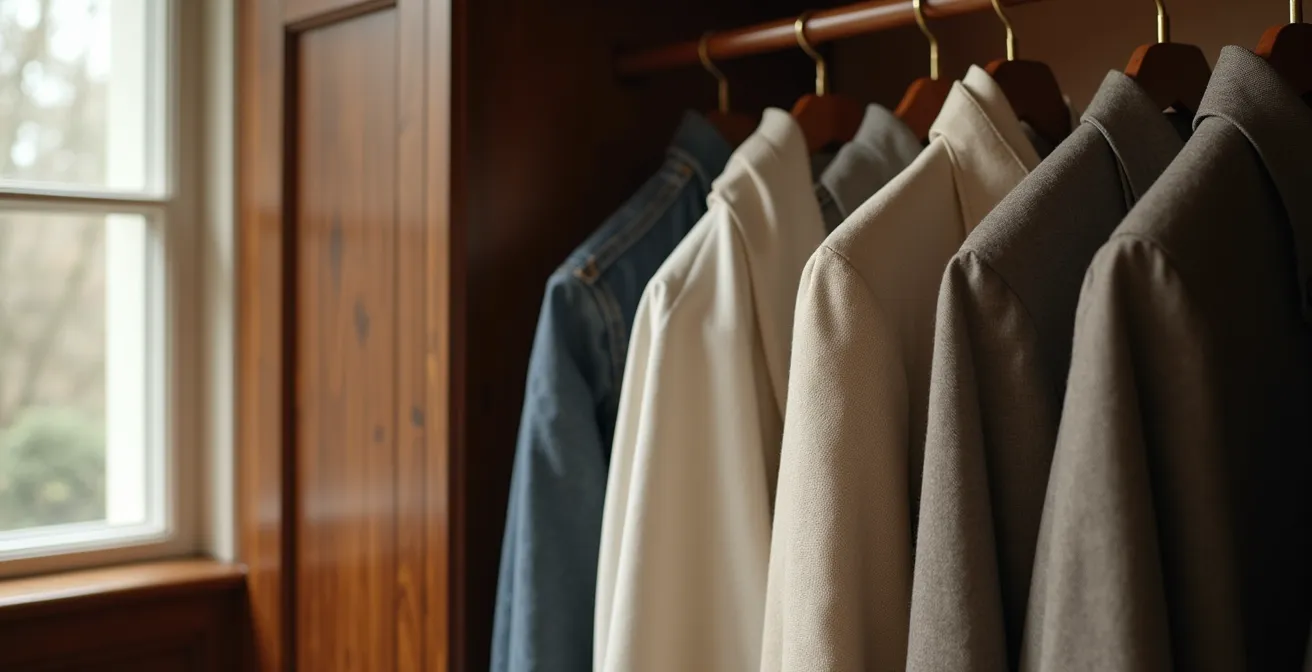
The perfect trouser line is not determined by tailoring alone, but by mastering the physics of fabric friction between your underwear and outerwear.
- Heavy cotton underwear grips and bunches under smooth trousers, creating humidity traps and ruining the silhouette.
- Smooth, moisture-wicking fabrics like modal or micro-modal glide against outer layers, preserving the drape and ensuring all-day comfort.
Recommendation: Audit your underwear drawer not by shape, but by material. Match smooth, seamless underwear with fine trousers and reserve textured cotton for more rugged, casual wear.
For the man who invests in the sharp line of a well-cut pair of trousers, there is a subtle, persistent frustration: the foundation layer. The wrong underwear can bunch, grip, and create unsightly lines, effectively sabotaging the intended silhouette from within. This is a problem that even the finest Savile Row tailoring cannot solve on its own. The common debate of boxers versus briefs, while a valid starting point for personal preference, completely misses the most critical factor in achieving true comfort and a flawless drape.
The conversation rarely delves into the micro-dynamics of textile interaction. We accept generic advice like “cotton is breathable” without questioning its performance under specific conditions, such as the humid confines of a packed London Underground carriage or the high-pressure environment of a transatlantic flight. This guide moves beyond the surface-level discussion of fit and shape. It focuses on the science of fabric-on-fabric interaction: a world of glide, grip, shear stress, and moisture pathways.
The true secret to all-day comfort and an impeccable silhouette lies in understanding this friction. It’s about choosing an undergarment that works in harmony with your trousers, not against them. By analysing the specific properties of materials like modal, merino wool, and high-quality silk, we can build a foundational wardrobe that enhances, rather than detracts from, your outerwear. This article will deconstruct the science behind pairing underwear with your denim, wool, and linen trousers, providing a technical framework for making the right choice every time.
To navigate this technical landscape, the following sections break down the specific challenges and solutions for each fabric pairing. Consider this your definitive guide to mastering the foundational layer of your wardrobe.
Summary: A Technical Guide to Underwear and Trouser Fabric Pairings
- Why should you never wear heavy cotton boxers under lightweight linen trousers?
- How to coordinate rise heights to avoid waistbands stacking uncomfortably?
- Modal vs Polyester: Which glides better inside raw denim jeans?
- The silhouette error caused by bulky boxer seams showing through suit trousers
- What underwear prevents “crease transfer” to your trousers on long flights?
- The underwear mistake that ruins the line of a bias-cut gown
- How to wear your silk chemise as a summer dress without looking like you’re in pajamas?
- Why are laser-cut edges the secret to a seamless look under fitted trousers?
Why should you never wear heavy cotton boxers under lightweight linen trousers?
The pairing of heavy cotton underwear with lightweight linen trousers is a classic example of fabric conflict, particularly during the humid British summer. Linen is prized for its open, breathable weave, designed to allow air to circulate freely. However, standard cotton underwear, especially heavier weaves, has a textured surface that actively grips onto linen fibres. This friction causes the linen to bunch and cling, destroying the clean, relaxed drape that defines the garment. Instead of gliding, the two fabrics effectively lock together with every movement.
The more significant issue is moisture management. Cotton is hydrophilic, meaning it absorbs moisture readily but releases it slowly. When you perspire, the cotton underwear becomes a “humidity trap” against your skin. This trapped dampness not only feels uncomfortable but also makes the linen trousers stick to the underwear, exacerbating the bunching effect. In contrast, modern fabrics like modal offer a superior solution. Research shows that modal fabric absorbs 50% more moisture than cotton and wicks it away from the body far more effectively. This creates a drier, lower-friction interface.
A prime example of solving this is seen with Plymouth-based brand BAM, whose bamboo-viscose underwear is lauded by UK outdoor enthusiasts. The material’s smooth fibres and exceptional moisture-wicking properties prevent the chafing and sticking common when wearing active trousers in damp conditions. For linen, the principle is identical: choose an undergarment with a silky-smooth handfeel, like modal, micro-modal, or bamboo, to create a low-friction barrier that allows the linen to move as intended.
How to coordinate rise heights to avoid waistbands stacking uncomfortably?
Beyond fabric choice, the vertical alignment of your waistbands—the rise—is a critical detail for both comfort and a clean silhouette. When the waistband of your underwear sits at the same height or just below the waistband of your trousers, they can rub, roll over one another, or create a thick, visible ridge known as “waistband stacking”. This not only adds unnecessary bulk around the midsection but can also be intensely uncomfortable, digging into the skin throughout the day. The goal is to create separation between the two elastic bands.
The rule of thumb is to create contrast. For low-rise jeans or chinos, a low-rise trunk or brief is ideal as it sits well below the trouser line. Conversely, for high-waisted tailored trousers, a mid-rise brief works perfectly, as its waistband will be comfortably concealed about an inch or two below the trouser’s waistband. A high-rise boxer brief under high-waisted trousers is a recipe for stacking and discomfort. It is crucial to consider your body shape and the specific cut of the trousers.
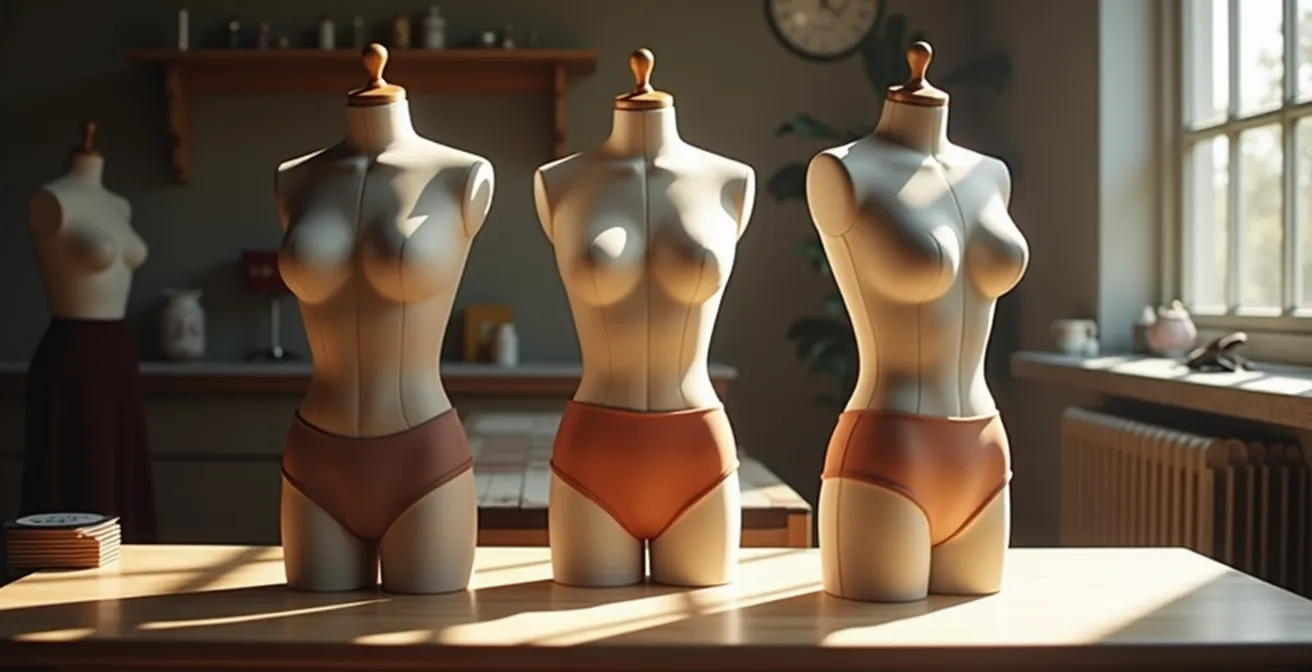
As this visual comparison illustrates, achieving a clean waistline is a matter of strategic placement. The key is ensuring the underwear’s waistband doesn’t compete with the trouser’s structural line. Many UK brands have distinct rise characteristics, making a targeted approach possible. For the discerning dresser, coordinating these heights is as important as selecting the right shoes for a suit. A practical reference can streamline this process significantly.
This following guide, based on an analysis of popular UK high-street brands, offers a starting point for coordinating your foundation layer with your favourite trousers.
| Trouser Brand & Style | Recommended Underwear Rise | Brands to Avoid |
|---|---|---|
| Reiss Slim-fit Chinos | Low-rise briefs or trunks | High-rise boxer briefs |
| M&S High-waisted Tailored | Mid-rise briefs | Low-rise thongs |
| Paul Smith Slim Wool Suit | Mid-rise seamless | High-waisted boxers |
Modal vs Polyester: Which glides better inside raw denim jeans?
Raw denim presents a unique challenge. Its stiff, untreated, and often abrasive nature generates significant friction with any fabric it contacts. The ideal underwear for raw denim must do two things exceptionally well: provide a durable, low-friction glide to prevent chafing, and manage the inevitable moisture buildup within a non-breathable garment. This brings us to a direct comparison between two synthetic workhorses: modal and polyester.
Polyester is known for its strength and low moisture absorption, making it seem like a good candidate. However, its hydrophobic nature means it doesn’t manage sweat well; it tends to trap it between the fabric and skin, leading to a clammy feeling and potential odour issues. Modal, while also a synthetic (a semi-synthetic rayon made from beech tree pulp), behaves very differently. It has a significantly smoother, silkier fibre structure that offers superior glide against the coarse twill of denim. Furthermore, its moisture management is far more advanced. Modal’s moisture regain rate of around 13% allows it to pull vapour away from the skin and disperse it, creating a more balanced microclimate.
A compelling real-world test of this was conducted during wear tests on the London Underground. In a study by XYXX, testers wore micromodal and polyester underwear during peak summer commutes. The results were decisive: micromodal provided vastly superior breathability and odour resistance, with users reporting significantly less discomfort and a greater feeling of freshness after eight hours in the confined, humid environment. For the raw denim enthusiast, the conclusion is clear: modal’s combination of superior glide and advanced moisture management makes it the optimal choice for all-day comfort.
The silhouette error caused by bulky boxer seams showing through suit trousers
There is perhaps no greater sartorial sin than allowing the outline of your underwear to disrupt the clean line of a finely tailored suit trouser. This issue, often referred to as the male equivalent of a “visible panty line,” is typically caused by bulky seams, thick waistbands, and excess fabric. The fine wools, flannels, and cashmeres used in high-quality suiting are exceptionally unforgiving; they drape over the body’s contours and will reveal any textural irregularity beneath them. A traditional pair of boxer shorts with its prominent fly seam and gathered waistband is the worst possible offender.
The solution lies in technologies designed specifically for invisibility. The modern men’s underwear market has seen a significant shift towards seamless construction, a trend reflected in market analysis showing that the UK underwear market is growing at 4.98% annually, driven largely by innovation in comfort and seamless technology. Key features to look for are flatlock seams, which are stitched to lie completely flat against the skin, and more advanced laser-cut or bonded edges. These techniques eliminate the need for a hem altogether, creating a true zero-profile finish that is virtually undetectable under even the slimmest trousers.
Investing in underwear with these features is non-negotiable for anyone who regularly wears suits or tailored trousers. When trying on a new suit, it is essential to test for underwear visibility by sitting, walking, and bending in front of a mirror. What appears seamless when standing can sometimes become visible with movement. A proper audit of your foundation layer is the only way to guarantee a flawless silhouette.
Your Action Plan: Auditing for a Seamless Silhouette
- Points of Contact: Identify all trousers in your wardrobe made of fine-gauge wool, silk blends, or lightweight fabrics. These are your high-risk garments.
- Collect & Inventory: Lay out your current underwear. Separate items with traditional bulky seams from those with flatlock or seamless/laser-cut edges.
- Coherence Check: Wear your bulkiest underwear under your slimmest trousers. Use your phone to take a photo from the back. The visual evidence of seam lines will be your benchmark for what to avoid.
- Mnemonic & Emotional Test: Does your underwear feel like a second skin (the goal) or a separate, noticeable layer (the problem)? The goal is “wear and forget.”
- Plan for Integration: Prioritise replacing 2-3 of your worst-offending pairs with high-quality seamless options from brands specialising in invisible lines.
What underwear prevents “crease transfer” to your trousers on long flights?
Long-haul travel presents a unique form of textile torture. Being seated for hours subjects the fabrics of both your underwear and trousers to constant pressure and micro-movements. This creates a phenomenon known as “crease transfer” or “fabric memory,” where the wrinkles and bunching from your undergarment become imprinted onto your trousers. You stand up after a seven-hour flight only to find your perfectly pressed trousers are a mess of horizontal lines and rumples originating from the bunched-up cotton boxer briefs underneath.
The cause is a combination of fabric instability and moisture. Under pressure, less resilient fabrics like cotton deform and hold their shape. The presence of even small amounts of perspiration acts as a setting agent for these creases. To combat this, you need a material with high natural elasticity and excellent moisture management. This is where merino wool excels. Its natural crimp gives it a spring-like quality, allowing it to resist and recover from creasing far better than cotton or many synthetics. Furthermore, it can absorb up to 30% of its weight in moisture without feeling damp, effectively managing the microclimate under pressure.
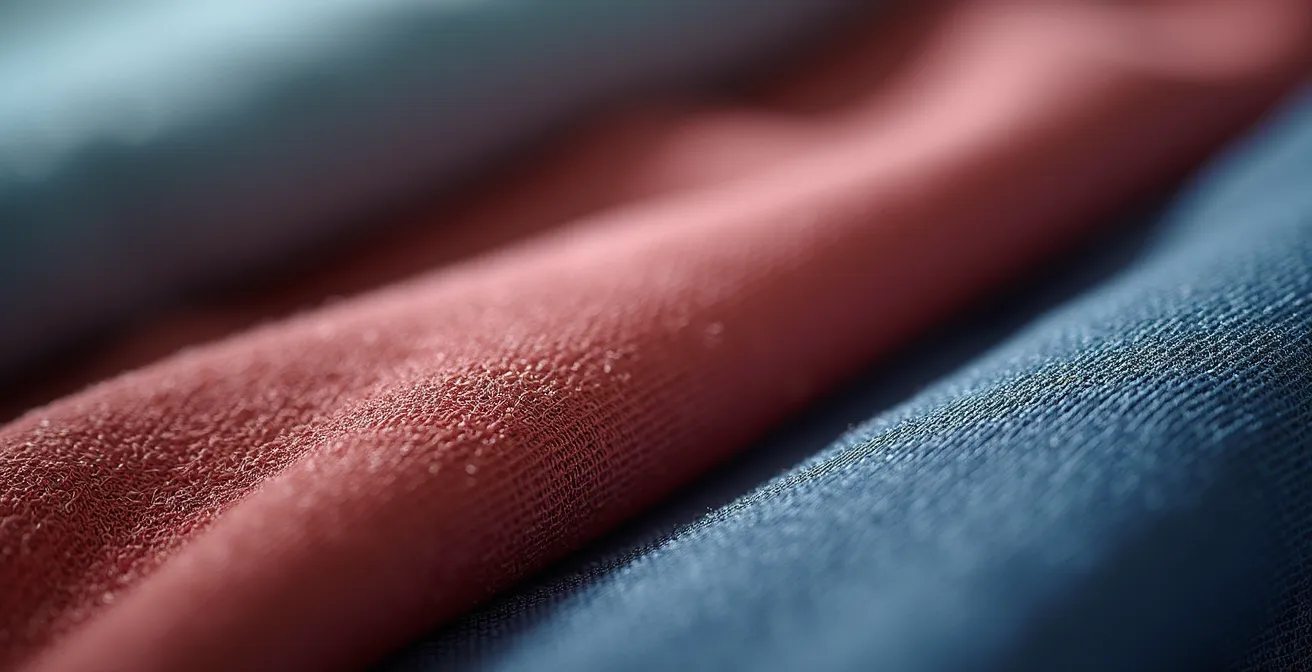
In a test conducted with UK business professionals on transatlantic flights from Heathrow to NYC, merino wool underwear from brands like Icebreaker proved most effective. Travellers reported that their trousers remained remarkably smooth and presentable upon arrival, with minimal crease transfer compared to those wearing cotton or standard synthetics. The natural elasticity and moisture-wicking of the merino fibres prevented the underwear from bunching and setting creases into the wool suit trousers worn over them, even under the constant pressure of a seatbelt. For the frequent flyer, merino wool underwear is not a luxury; it is an essential piece of travel equipment.
The underwear mistake that ruins the line of a bias-cut gown
While the term “bias-cut gown” immediately brings womenswear to mind, the underlying principle is directly relevant to high-end menswear. The “bias cut” refers to fabric cut on a 45-degree angle, giving it a fluid, body-hugging drape. This same characteristic is found in men’s trousers made from luxury materials like silk blends, fine-gauge knits, or viscose. These fabrics are designed to flow, not skim, and they are ruthlessly honest, revealing every contour—and every mistake—underneath.
The cardinal sin with such garments is wearing underwear that shifts or has any discernible edge. An undergarment that rides up or bunches will create a catastrophic break in the trouser’s intended line. As the design team at Heist Studios, a leader in seamless technology, notes, “High-quality seamless underwear with silicone grippers at the leg or waist openings will stay perfectly in place.” This technology, once confined to women’s shapewear, is now a critical feature in premium men’s underwear designed for performance and invisibility.
For trousers with this level of fluidity, the selection protocol must be rigorous. First, laser-cut trunks or briefs are the baseline requirement for a zero-profile edge. Second, one must consider the option of “going commando,” but this is only advisable if the trousers are well-lined and constructed from a substantial fabric. For unlined or lighter-coloured trousers, this risks transparency issues. In extreme cases, where a perfectly clean line is paramount for a specific event, body tape can be used to secure the drape of the trouser fabric directly to the skin, a technique borrowed from red-carpet styling.
How to wear your silk chemise as a summer dress without looking like you’re in pajamas?
This question, though framed for a different context, strikes at the heart of a key issue in luxury underwear: the distinction between functional garment and flimsy sleepwear. When it comes to men’s silk underwear, the challenge isn’t wearing it as outerwear, but ensuring it doesn’t *behave* like pyjamas beneath your trousers. Low-quality silk, often found in novelty boxers, is thin, overly shiny, and lacks structural integrity. It will bunch, crease, and cling with static, looking and feeling sloppy under a pair of linen or wool trousers.
The difference lies entirely in the quality of the silk, which is measured in momme (mm). This unit denotes the weight of the fabric; a higher momme count signifies a denser, more durable, and more substantial weave. As demonstrated by high-end brands like Intimissimi during London Fashion Week, it is the quality and finish of the silk that dictates its perception. High-momme silks have a more matte, pearlescent lustre rather than a cheap-looking shine, and they possess a weight that allows them to drape beautifully rather than cling erratically.
For a man considering silk underwear, understanding this metric is essential. A pair of silk boxer briefs made from 19-momme silk or higher will have enough substance to hold its shape, provide a smooth layer under trousers, and feel luxurious. Anything less, especially under 16 momme, will likely lack the structural integrity for daywear and perform poorly.
| Silk Quality | Appearance | Daywear Suitable |
|---|---|---|
| 19 momme or higher | Matte, substantial drape | Yes – performs as luxury layer |
| 12-16 momme | Slight sheen, lighter weight | Requires careful pairing; risk of bunching |
| Under 12 momme | Shiny, transparent | No – appears and behaves as sleepwear |
Key Takeaways
- Master Fabric Interaction: The primary goal is to ensure your underwear ‘glides’ against your trousers, not ‘grips’. Smooth fabrics like modal are superior to textured ones like cotton for most tailored trousers.
- Control the Moisture Pathway: Effective moisture-wicking is crucial for comfort and preventing fabric from sticking. Choose materials like modal, merino wool, or bamboo over standard cotton, which traps humidity.
- Demand a Zero-Profile Construction: For a clean silhouette under fitted trousers, underwear with bulky seams is unacceptable. Prioritise laser-cut edges and flatlock seams for a truly invisible finish.
Why are laser-cut edges the secret to a seamless look under fitted trousers?
The pursuit of a perfectly seamless silhouette has culminated in a single piece of technology: the laser-cut edge. For decades, the weak point of any undergarment was its hem—a folded, stitched edge that, no matter how finely executed, created a ridge. This ridge is the primary culprit behind visible underwear lines. Laser-cutting technology eradicates the hem entirely. It uses a high-intensity laser to slice through a single ply of fabric, simultaneously sealing the edge to prevent fraying. The result is a “zero-edge finish”—an edge that is no thicker than the fabric itself.
This innovation allows the underwear to lie completely flat against the skin, transitioning to the leg or waist without any discernible step-off. When worn under fitted trousers, there is simply no edge for the outer fabric to catch on or press against, making the undergarment functionally invisible. This technology has been a game-changer, moving from niche athletic wear to the mainstream. Marks & Spencer, for example, successfully integrated this into their popular Cool & Fresh range, which has become a go-to choice in the UK for wear under slim-fit trousers from brands like Reiss and Joseph.
While this technology was once a premium feature, its widespread adoption has made it more accessible. For a man who values the clean, unbroken line of his trousers, investing in underwear with laser-cut edges is the single most effective step he can take. It is the technical solution to an aesthetic problem, providing a level of sleekness that traditional construction methods simply cannot match.
To truly master your personal style, begin by auditing your foundation layer. Evaluate your current underwear against the fabrics of your favourite trousers and invest in the pairings that enhance, rather than hinder, your silhouette. This attention to detail is the hallmark of a truly well-dressed individual.