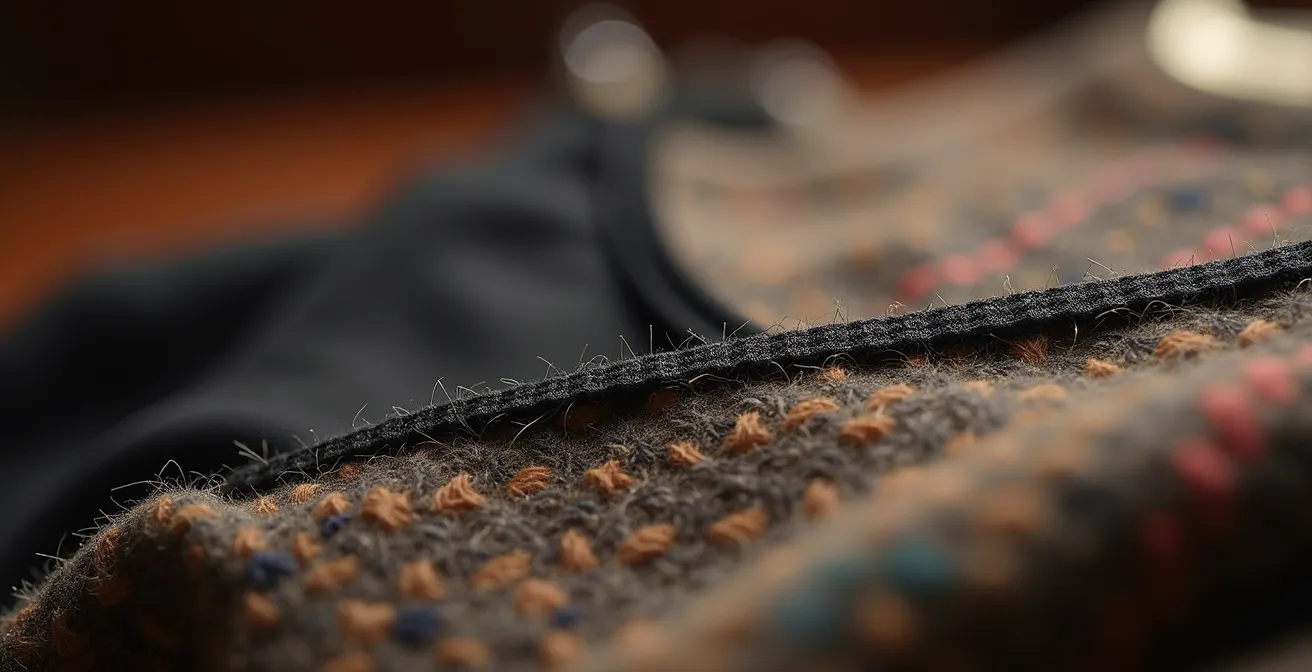
The secret to a truly seamless look isn’t just buying ‘laser-cut’ underwear; it’s understanding the material science that prevents edge rolling and ensures invisibility.
- Success depends on fabric tension and recovery, not just a raw edge. The wrong material or size will always fail.
- Proper care is non-negotiable. High heat and harsh detergents degrade the adhesives and elastic fibres that make seamless technology work.
Recommendation: Prioritise underwear with wide, soft waistbands and micro-modal fabric blends, and always wash them cold inside a mesh bag to protect your investment.
For the man who invests in tailored suits and slim-fit trousers, the clean line of the silhouette is paramount. Yet, this precision can be instantly undermined by a single, intrusive element: the visible edge of his underwear. The common advice is to simply switch to “seamless” or “laser-cut” options. However, this often leads to a new set of frustrations—edges that roll down, hems that un-stick after a few washes, and a finish that isn’t as invisible as promised. The market is flooded with options, but true success lies beyond the marketing buzzwords.
The solution is not to just buy another pair, but to adopt the mindset of a manufacturing engineer. Understanding the core principles of material integrity, adhesive bonding, and fabric tension is the key. This perspective transforms the problem from a simple shopping choice into a calculated decision about technology and performance. It explains why some laser-cut garments fail while others perform flawlessly, and why the interaction between your underwear and your trousers—be they wool, denim, or linen—is a matter of physics as much as fashion. It moves beyond the generic advice to provide a framework for selecting and maintaining underwear that truly honours the line of your tailored clothing.
This guide deconstructs the technology behind the perfect seamless finish. We will analyse the critical failure points, from rolling edges to adhesive degradation, and provide engineering-based solutions. By understanding the science, you can finally achieve a consistently clean, uninterrupted silhouette.
For those who prefer a visual format, the following video provides a fascinating look into the type of advanced circular knitting machinery used to create the base fabrics for high-performance seamless garments, showcasing the complexity behind achieving that second-skin feel.
To navigate the technical details of achieving a truly seamless look, this article is structured to address the most common engineering and material challenges. Each section breaks down a specific problem and offers a precise, actionable solution.
Summary: The Engineer’s Guide to Invisible Underwear
- Why do some laser-cut edges roll down and how to prevent it?
- How to wash laser-cut items so the adhesive doesn’t fail?
- Raw Cut vs Bonded Hem: Which is truly invisible under wool?
- The silicone grip error that irritates skin in hot weather
- When do laser-cut fabrics lose their tension and need replacing?
- The underwear mistake that ruins the line of a bias-cut gown
- What seamless solutions work best under ultra-tight jersey fabrics?
- Which underwear fabrics pair best with denim, wool, and linen trousers?
Why do some laser-cut edges roll down and how to prevent it?
The “rolling edge” is the most common failure point in laser-cut underwear, and its cause is rooted in physics: insufficient tension and grip. A laser simply cuts the fabric, leaving a raw edge. If the fabric’s inherent elastic recovery is poor, or if the garment is incorrectly sized, the edge lacks the force to lie flat against the skin. It will inevitably curl or bunch under the friction and movement of outer layers. This is especially true for boxer briefs, which hold a dominant 34.1% share of the UK men’s underwear market in 2024, making this a widespread issue.
The primary engineering flaw is often a thin, inadequate waistband. A wider, softer waistband distributes pressure more evenly and provides a stable anchor, preventing the garment from shifting and causing the leg edges to roll. Fabric choice is also critical. Materials like micro-modal blends offer superior stretch and recovery, meaning they move with the body and snap back into place, maintaining the necessary tension to keep edges flat.
Finally, the cut itself is a crucial variable. Premium brands understand that the angle of the leg opening affects the fit on the thigh. As different companies cut these at different angles, there is no universal standard. The solution is often to try different brands to find the cut that best matches your physique, especially if you have larger thighs. This bypasses the problem of fabric rising and creating a roll of material during the day.
How to wash laser-cut items so the adhesive doesn’t fail?
The longevity of laser-cut and bonded-hem underwear depends almost entirely on proper laundering. The adhesives used for thermal bonding are sophisticated polymers, but they are vulnerable to two primary enemies: high heat and harsh chemical agents. High-temperature washes and tumble drying can cause the adhesive to soften, lose its bond strength, and eventually delaminate, leading to frayed edges and a complete loss of the seamless effect. This is the most common point of adhesive failure.
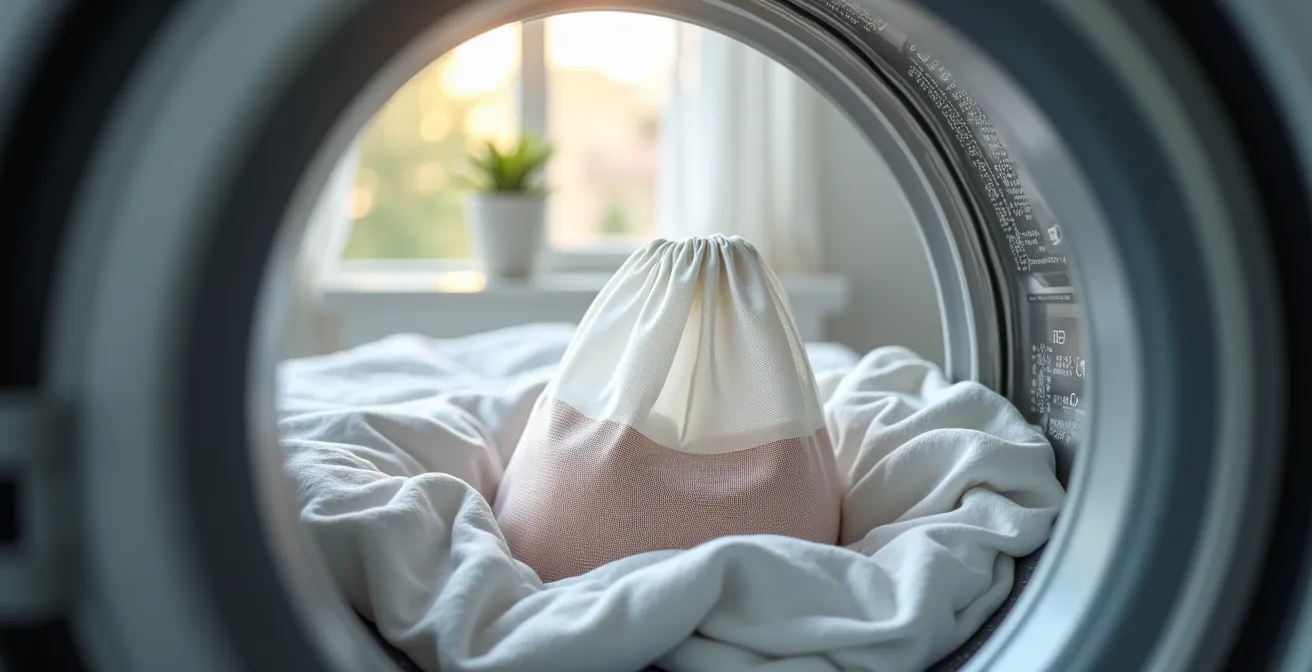
To prevent this, a strict cold-wash protocol is essential. Always wash these items at 30°C or lower. In the UK, it’s also wise to use gentle, non-bio detergents and avoid fabric softeners, as their conditioning agents can create a film on the fibres and interfere with the adhesive’s integrity. Furthermore, a mesh delicates bag is a non-negotiable tool. It protects the fine fabric and bonded seams from snagging on zippers, buttons, or other abrasive items in the wash, which can cause micro-tears that compromise the material’s structure.
For those living in London and the South East, the UK’s notoriously hard water presents another challenge. Mineral deposits can build up on the fabric, making it feel stiff and reducing the effectiveness of detergents. Using a laundry water softener tablet in the wash can mitigate this, ensuring a cleaner rinse and preserving the fabric’s softness and the adhesive’s performance. Finally, always air dry your garments away from direct heat or sunlight. If you must use a tumble dryer, select the lowest possible heat setting.
Raw Cut vs Bonded Hem: Which is truly invisible under wool?
The term “laser-cut” is often used as a catch-all, but it describes two distinct manufacturing techniques: the raw cut and the bonded hem. As the technical experts at SCHIESSER note, the goal of their Laser Cut collection is to solve the problem of visible seams through “innovative technology” for “technical perfection.” Understanding this technology is key to choosing the right garment for your trousers.
SCHIESSER seamless underwear for men from the Laser Cut collection solves the problem of visible seams thanks to its innovative technology. Technical perfection for an invisible design and maximum comfort.
– SCHIESSER, SCHIESSER UK Product Description
The choice between these two methods depends entirely on the fabric of the trousers you’re wearing. For fine-gauge worsted wool trousers, which are lightweight and drape closely to the body, a raw-cut edge is superior. Because it’s a single layer of fabric, it creates the absolute minimum of deviation from the skin, rendering it truly invisible. A bonded hem, however slight, introduces a second layer and an adhesive line that can create a faint ridge under such delicate material.
This dynamic reverses with heavier fabrics like tweed or flannel. Here, a bonded hem offers better performance. The folded and bonded edge provides a slightly more structured finish that resists curling and is completely hidden by the weight and texture of the outer fabric. The raw cut, while thinner, can be more prone to rolling under the friction of a coarser material. The following table breaks down the core differences.
| Feature | Raw Cut | Bonded Hem |
|---|---|---|
| Construction | Single layer of fabric cut with laser, raw seam cut at edges | Folded edge secured with adhesive |
| Best for | Fine-gauge worsted wool trousers | Heavier fabrics like tweed or flannel |
| Feel | Fits like a second skin | Slightly more structured edge |
| Visibility | Underwear lines eliminated, invisible through clothing | Minimal ridge, hidden by heavier fabric weight |
The silicone grip error that irritates skin in hot weather
To combat the issue of rolling edges, some manufacturers apply thin strips of silicone grip along the leg or waist openings. While effective from a mechanical standpoint, this solution introduces a significant ergonomic problem, particularly during the UK’s increasingly warm and humid summers. Silicone is non-porous and traps moisture and heat against the skin. This can lead to irritation, redness, and discomfort as sweat accumulates underneath the grip strip, creating a perfect environment for chafing.
The engineering error here is solving one problem (rolling) by creating another (poor breathability). A superior design philosophy relies on fabric technology and construction to provide grip, rather than adding a foreign material. Compression-style fits, which use the inherent tension of the fabric to stay in place, are an excellent alternative. Similarly, modern waistbands are engineered with breathable constructions that grip without trapping heat.
A prime example of a successful non-silicone solution is found in products like Uniqlo’s AIRism range. In testing, their Ultra Seamless Boxers were found to fit “like a glove,” with a cut-off waist that “felt invisible, sitting flush against the skin without squeezing or rolling.” This demonstrates that a combination of intelligent fabric choice—like modal or micro-modal which are silky and control moisture—and a precise cut can achieve the desired stability without the dermatological downsides of silicone. For hot weather, always prioritise solutions that integrate grip into the fabric’s structure itself.
Your Action Plan: Silicone-Free Grip Alternatives for UK Summer
- Choose compression-style fits that rely on fabric tension rather than silicone strips.
- Opt for modal or micro-modal fabrics that feel silky smooth and offer superior moisture control.
- Look for wide, soft elastic waistbands with breathable, woven constructions.
- Select underwear with innovative pouch designs that provide support and prevent sticking naturally, reducing the need for grip strips.
When do laser-cut fabrics lose their tension and need replacing?
The performance of laser-cut underwear is defined by its elasticity, or what engineers call “tension and recovery.” The elastane (Lycra®) fibres woven into the fabric are what allow it to stretch and snap back, holding the raw edges flat against the skin. Over time, through mechanical stress (wearing) and thermal/chemical stress (washing), these fibres degrade and lose their recovery capability. This loss of tension is the primary indicator that the garment has reached the end of its operational life and needs replacing, a key consideration in a UK market projected to be worth £1.8 billion by 2025 as men invest more in quality.
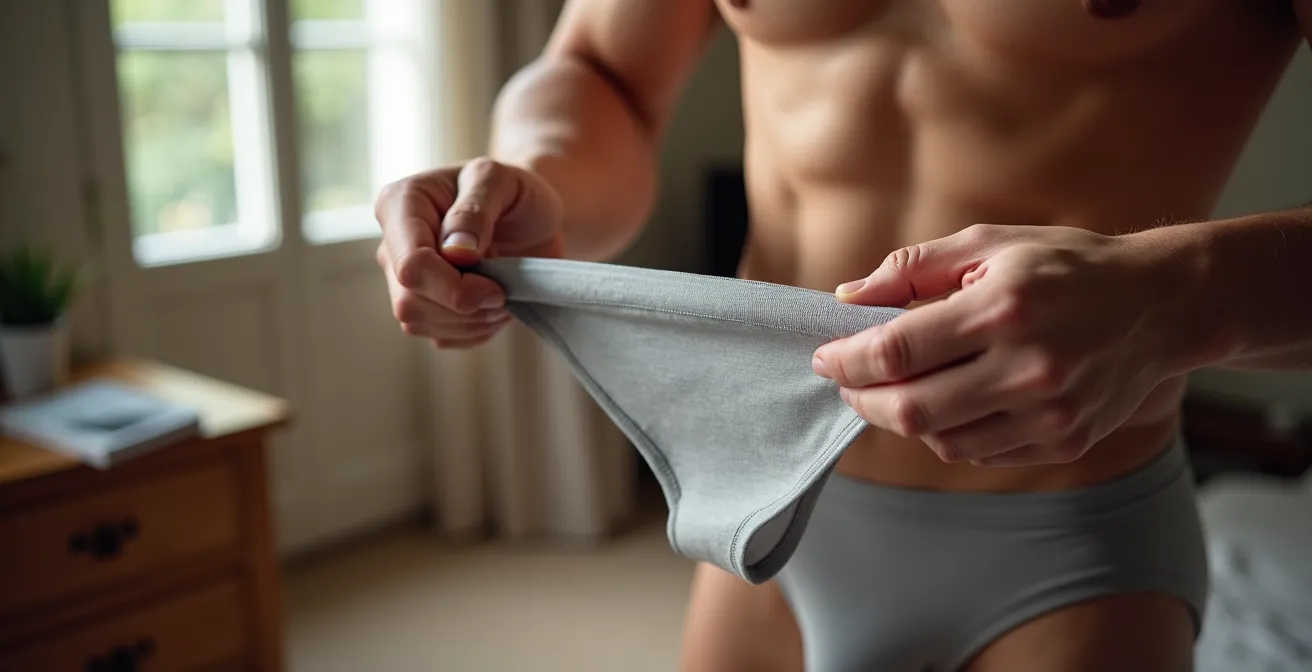
The most obvious sign of material fatigue is a stretched-out waistband that no longer grips firmly. You’ll find yourself constantly pulling the underwear up. Another clear indicator is the feel of the fabric; as elastane breaks down, the material can feel rough or lose its silky texture. Visually, look for pilling (small balls of fibre on the surface) or transparency when the fabric is stretched. If you can see through the material easily when you pull on it, the core fibres have lost their integrity.
A simple physical test can confirm this. Hold a section of the waistband or leg opening between your hands and stretch it moderately. A new or well-maintained garment will snap back instantly to its original shape. A worn-out garment will return slowly or remain slightly stretched. Any fraying or “laddering” along a raw-cut edge is a terminal diagnosis; the fabric structure has failed and replacement is the only option.
Checklist: Signs Your Laser-Cut Underwear Needs Replacing
- Waistband Integrity: Is the waistband stretched out or loose? Do you have to pull your underwear up frequently?
- Fabric Texture: Does the fabric feel rough to the touch, or has it lost its initial smoothness?
- Visual Inspection: Is there visible pilling on the surface, or can you see through the fabric when it’s stretched?
- Edge Condition: Are there any signs of fraying, un-sticking adhesive, or laddering along the raw-cut edges?
- Recovery Test: When you stretch a section and release it, does it snap back instantly or return slowly?
The underwear mistake that ruins the line of a bias-cut gown
While the term “bias-cut gown” is from womenswear, the underlying principle is directly applicable to high-end men’s tailoring. A bias cut involves orienting fabric diagonally to the grain, giving it a unique fluidity and drape. In menswear, this technique is used in premium trousers to create a silhouette that hangs perfectly. The single biggest mistake that ruins this intended line is wearing underwear with an improper structure or rise, which creates tension and bunching beneath the delicate fabric.
Underwear with bulky seams, a low-slung waistband, or insufficient support forces constant readjustment. This movement disrupts the smooth fall of the trouser fabric, creating visible wrinkles and breaking the clean silhouette. The problem isn’t just about visible lines from seams; it’s about the entire under-garment working against the design of the outerwear. A low-rise brief under a high-waisted trouser, for example, will inevitably pull and create an unsightly line at the waistband.
The solution lies in underwear that is engineered for stability and support, effectively acting as a secure foundation. This is where innovative structural designs become critical, serving a purpose far beyond simple comfort.
Case Study: The Engineering of the Saxx BallPark Pouch™
The design of Saxx Underwear’s patented BallPark Pouch™ provides an excellent example of structural engineering solving this problem. By creating a 3D hammock-shaped pouch with mesh panels, the design offers contact-free support. As noted in a review by Insider, this construction limits chafing, reduces moisture, and critically, prevents the need for constant readjustment. By keeping everything securely in place, the underwear becomes a stable, second skin. This stability ensures that the outer trouser fabric can drape exactly as the tailor intended, without being disturbed by shifting from underneath. It proves that for the best-dressed man, what’s underneath is a crucial component of the final look.
What seamless solutions work best under ultra-tight jersey fabrics?
Ultra-tight jersey fabrics, often used in modern, fashion-forward trousers or high-performance athletic wear, present the ultimate challenge for invisibility. This material clings to every contour of the body, meaning that any texture, seam, or edge from underwear will be instantly visible. The global seamless underwear market is responding to this demand for total invisibility, with growth projections showing its value rising from $56.55 billion in 2025 to $121.87 billion by 2035. For jersey, the solution lies in selecting underwear made from the most advanced, lightweight, and smooth synthetic fabrics available.
The ideal material must have an extremely low friction coefficient and feel like a second skin. Microfibre is a top contender; it’s exceptionally lightweight, breathable, and often incorporates moisture-wicking technology, making it comfortable even when worn tightly against the skin. Its fine threads create a surface so smooth that jersey fabric glides over it without catching or revealing any texture.
Modal and micro-modal fabrics are also excellent choices. Derived from beech trees, this material is known for its incredible softness and silky feel, which helps in reducing friction under tight clothing. It also offers great moisture control. Finally, proprietary technologies like Uniqlo’s AIRism are specifically engineered for this purpose. AIRism fabric actively pulls moisture away from the skin to keep you dry, and its ultra-fine fibres create a garment that is exceptionally thin and light, making it virtually undetectable even under the most unforgiving jersey.
| Fabric Type | Benefits | Best For |
|---|---|---|
| Microfibre | Lightweight, super breathable, moisture-wicking technology | Slim-fit jersey trousers |
| Modal/Micro-modal | Silky smooth, moisture control | Fashion-forward fits |
| Airism Technology | Pulls moisture away from skin, keeps you fresh and dry | Active wear, hot days |
Key Takeaways
- The invisibility of laser-cut underwear is a function of material science (tension and recovery), not just a raw edge.
- Proper care is paramount: cold washes in a mesh bag and air drying are non-negotiable to protect adhesives and elastane fibres.
- The best underwear choice depends on your trousers: use raw-cut edges for fine wool and bonded hems for heavier fabrics like denim or tweed.
Which underwear fabrics pair best with denim, wool, and linen trousers?
Just as a tailor pairs a certain thread with a specific cloth, the discerning man should pair his underwear fabric with his trousers. The interaction between the two layers—in terms of friction, breathability, and structure—dictates both comfort and the final appearance. Each major trouser material has an ideal under-garment partner. While cotton still holds a significant 40% share of the men’s underwear market, modern synthetic and semi-synthetic blends often offer superior performance for specific pairings.
For rugged denim, the main challenges are friction and heat retention. A durable, smooth-faced nylon/elastane blend is the optimal choice. It provides excellent resistance to the abrasion from the coarse denim twill and offers better breathability than cotton, preventing discomfort during extended wear.
For wool trousers, breathability and moisture management are key. Wool is an excellent natural insulator, but it requires a base layer that can wick away perspiration to maintain comfort. A polyamide blend is ideal here. It’s supple, moves easily against the wool, and has superior moisture-wicking properties, ensuring you stay dry and comfortable.
Finally, for lightweight linen trousers worn in warm weather, the goal is to have an underwear layer that feels like it isn’t there at all. Tencel™ Modal is the perfect material for this. Its exceptionally smooth, cool-to-the-touch feel and “second-skin” quality, combined with excellent moisture-wicking, make it the ultimate pairing for breathable, relaxed linen.
| Trouser Fabric | Best Underwear Material | Key Benefits |
|---|---|---|
| Denim | Nylon/Elastane Blend | Friction resistance, breathability |
| Wool | Polyamide Blend | Breathability, moisture-wicking, suppleness |
| Linen | Tencel™ Modal | Second-skin feel, moisture-wicking |
By applying this engineering mindset—considering material properties, construction methods, and the physics of fabric interaction—you can move beyond guesswork. You can strategically select and maintain foundational garments that guarantee a clean, modern silhouette. This approach transforms underwear from a mere necessity into a technical component of a perfectly executed wardrobe, where comfort and style are designed, not accidental.